The best failure stories are the ones that happen unexpectedly
Those that happen when things are apparently "going well". That happened to Federico Richardson, who told his story in one of our private one of our private events and we bring it to you exclusively.
How did expanding a business to another country almost destroy everything? Let's hear it from Federico himself.
- Eric, General Manager of Fuckup Nights Global
Who
FuN: Who are you and what is your mission?
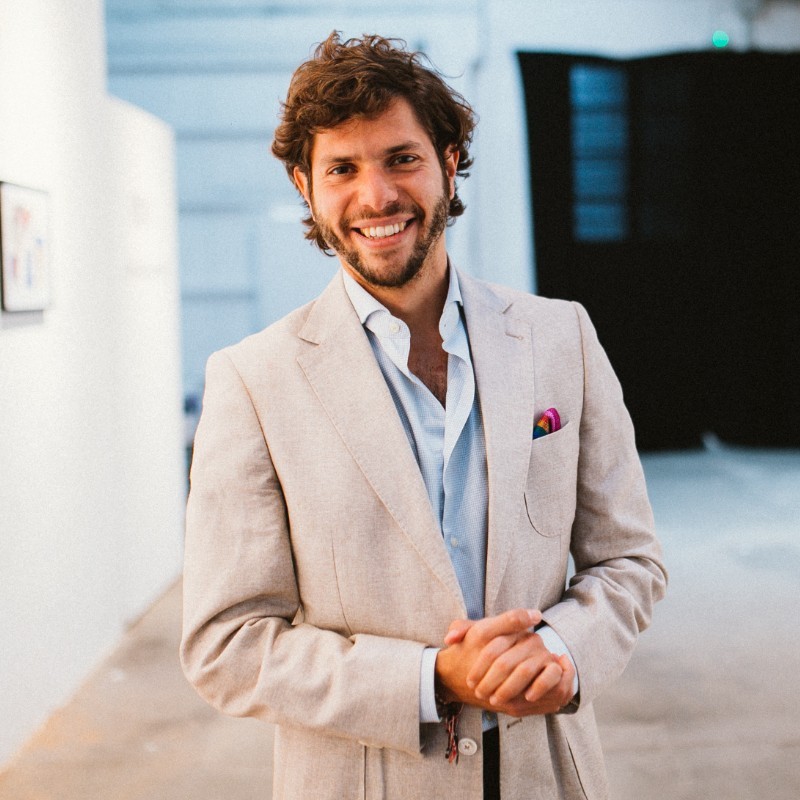
Federico Richardson Alborná, is a lawyer and the founder of Lexidy, an international firm created with the mission of making law more straightforward, more accessible, and more human for everyone. His purpose has always been to transform traditional legal practice into a modern, approachable service built on trust and collaboration.
FuN: What is your personal definition of failure?
Federico: Failure is blindly trusting that passion and good intentions are enough to sustain a company. It's forgetting that trust—without structure and protected values—can turn against you. In my case, failure was giving too much power without enough clarity.
FuN: What was your life like before taking on this new challenge?
Federico: It was 2019, and everything at Lexidy was growing. It felt like the early days of something we now seem to have mastered, but back then, we honestly had no idea what we were doing.
We had consolidated our office in Barcelona and started expanding into Portugal. We thought that if we had the same demand there, we could simply copy and paste the model and replicate it.
Because we were a young team with limited experience, we were negligent in how we handled cases. On paper, everything looked good, but the truth was completely different. People always say you can't replicate culture, and this was proof of that.
The expansion into Portugal was born out of optimism. We found a young foreign entrepreneur with hunger and energy, and entrusted him with opening the office.
💣 The True F*up
What started to happen was that Portugal began developing its own values and its own way of operating. The person we hired ended up recruiting 80% of the office, all of the same nationality.
And there’s nothing inherently wrong with that—but the reality was that we were affecting the Portuguese market, because the team didn’t share the same social and cultural context.
At some point, he seemed more like the owner of his own firm, with only a few voices from headquarters behind him.
I ignored it, thinking it was just a phase in the process and that things would gradually stabilize. But the truth is, they didn’t.
FuN: What was the exact moment when everything blew up?
One day, I received an unexpected call: he was resigning… and with him, half of the team. The leaders of immigration, real estate, and corporate (all part of his close circle) were leaving as well.
I was left staring at a massive void. Clients unattended, operations frozen, and the very real possibility of closing the office. It was a punch in the gut. For the first time, I felt that everything I had worked so hard to build could disappear in a matter of days.
What did you feel, and what were the consequences?
We lost people, we lost clients, we lost money… but I think we also lost a bit of our innocence and that naïve belief that everyone who joins truly shares your vision.
I had to look the team in the eye and assure them Lexidy wouldn't collapse. We also had to give more guarantees to those who stayed, prove to them that there was a long-term project and that we needed them to step up, especially the younger talent.
So what was the real mistake here? I think I trusted too much without having a structure. I built a company with values, but not the right ones, and on top of that, we didn't protect them through operations. When someone has power but isn't fully aligned with the mission, their place is always limited.
FuN: How was the situation resolved, and what was the transition toward a new path like?
We decided not to give up. We gathered the remaining team, reinforced our processes, and rebuilt trust step by step.
We had to take control of the narrative regarding what alignment would truly look like moving forward. Today, Portugal is one of our strongest offices. It's performing well and has solid leadership aligned with our vision.
In short, looking back, I learned that trust is powerful… but it's not a business model.
FuN: What would you do differently if you could start over?
I would give freedom with clear boundaries. Autonomy is powerful, but without accountability, it becomes a risk. And above all, I would prioritize culture before growth.
💡 In Conclusion....
- Trust is powerful, but it's not a business model.
- You can't copy a culture; you must rebuild it in each place.
- International expansion requires structure before enthusiasm.
- Empowering without direction is a silent form of abandonment
- Real growth happens when the team understands both limits and freedom.
Connect with Federico!
Remember, our channels are open for questions, complaints, feedback or collaborations at: rich@fuckupnights.com.










.svg)

.webp)

.png)
.png)
.png)
.png)

.png)
.png)
.png)
.png)
.png)
.png)
.webp)
.png)
.png)
.png)
.png)
.png)
%20(1).png)


.avif)

