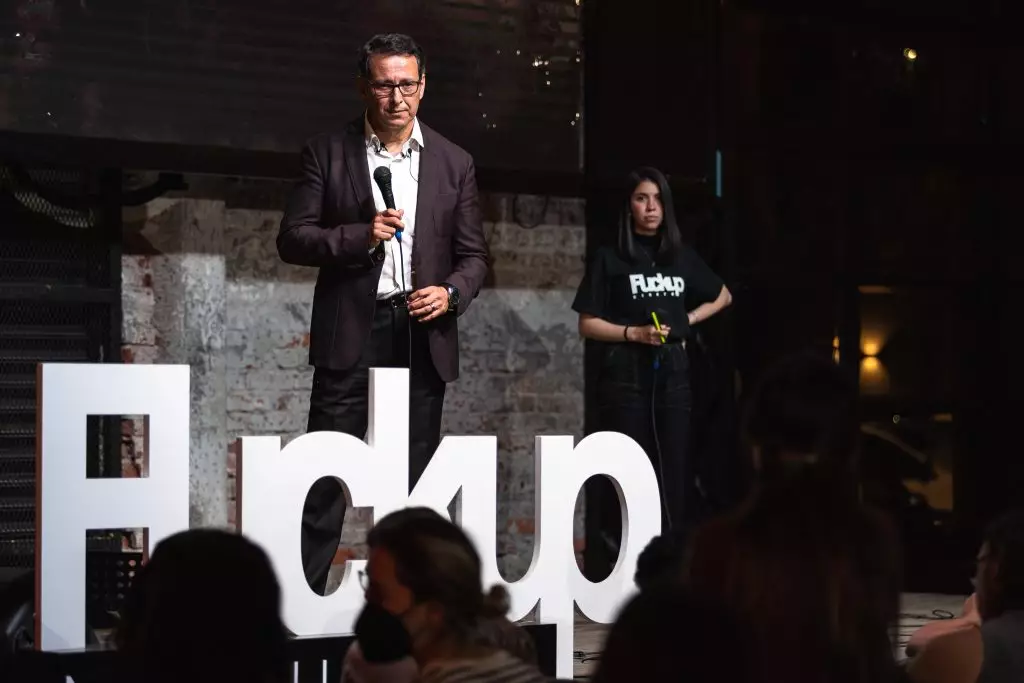
We were looking for inspiration to start 2026 on the right foot. That's when we thought of Martin Henk, co-founder of Pipedrive.
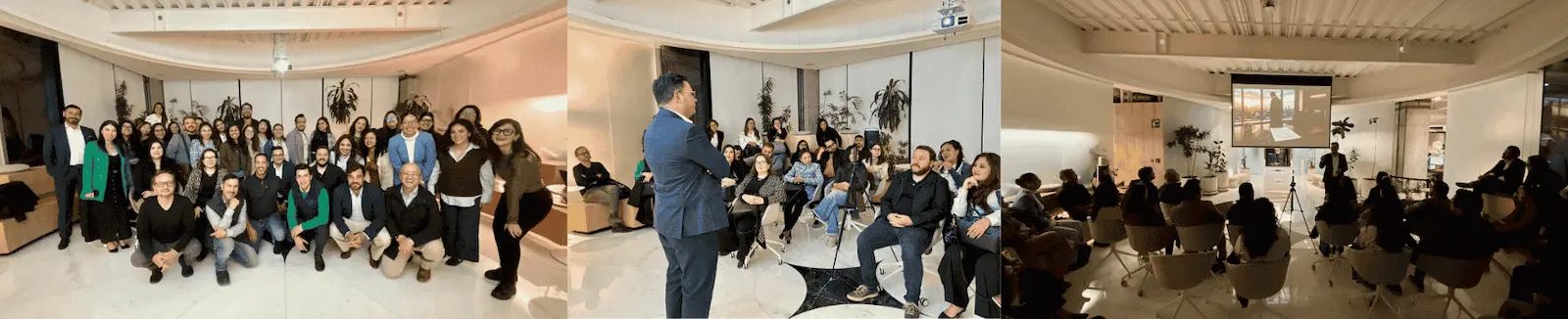
Its origins can be traced back to a series of " Fuckup Nights " events held last year in partnership with the Estonian government as part of its e-Residency program.
Starting with an unusual idea (launching a social network for pets), Martin encountered mistake after mistake. But he also learned valuable lessons that propelled him on his way to founding an Estonian unicorn.
Continue reading to learn more about their story...
Trying to launch a social network for pets
👤 Who
Martin Henk is the co-founder of Pipedrive, the Estonian unicorn that revolutionized sales management globally. He has been part of several startups that failed (some more epically than others), but those experiences ultimately led him to build one of the most admired products in the tech world.
Today, in addition to being an angel investor, he devotes his time to carpentry and metalworking, as he believes that there is always something to learn from failure.
FuN: What is your personal definition of failure?
Martin: Failure is very similar to working out at the gym. It's hard, especially at first. Over time, you get used to it. And you know it's good for you, even if it doesn't feel that way at the time. Failure is always an option, but of course it can't be the goal. So it's best to analyze the situation as objectively as possible, identify the problems, and try to do better next time.
FuN: What was your life like before you took on this new challenge?
Martin: I've been part of many startups over the years. Pipedrive was that big success story, but the others failed. Most faded away quietly, but one of them ended with quite a big bang. And that's the one I'm about to share: a social network for pets.
I admit that today even the idea sounds funny. But it was 2007, we were still discovering the internet, and we saw things much stranger than that. People love their pets, and pet food companies love to advertise to a well-segmented audience.
We thought we had found the perfect formula.
We were pretty good at attracting new users to the site. Facebook ads had just been launched, and it was easy and inexpensive to generate traffic. We saw very strong growth in registered users; we ended up with half a million users, which was quite a large number in 2008.
We were celebrating; the numbers looked incredible. But there was a small problem... everyone was leaving. They would sign up, upload photos... and never return.
💣 The real F*up
Martin: We tried to do too many things at once (with a very small team). We sold advertising campaigns, launched photo contests, built new features, and even added a paid subscription option.
In the process, we completely lost focus.
The first version of the site was launched in Estonia, and we managed to get some big advertisers on board quite easily. Based on that, we projected big numbers when the site went global... and investors expected rapid revenue growth.
The site was built quickly, without a good structure. It was difficult to maintain and almost impossible to scale. Every time many more users arrived, it crashed or became very slow. In addition, we had no backup whatsoever.
At some point, a hard drive failed on our only server and the site disappeared.
I felt completely helpless, as I was working remotely while the rest of the team was gathered in the office, fixing problems caused by my failure to set up proper backups.
FuN: How did things escalate?
Martin: We ended up rebuilding the entire site with a great deal of effort and expense, but we were doomed anyway.
We hired someone to lead the sales team, even though we knew he didn't fit in with the culture. He had a different vibe and background. He constantly referred to our development team as "the IT department" and asked us to fix his computer all the time.
He formed his own team and hired all kinds of people. One of them had a habit of drinking vodka in the office while making sales calls. Eventually, he stole the company computer and sold it at a pawn shop. Another took a business trip to Argentina and used the corporate card for all kinds of personal pleasures.
Needless to say, the sales team was not performing. Eventually, we ran out of money and laid everyone off.
FuN: It couldn't get any worse, could it?
Martin: Well, since we hadn't chosen the best investors, they took the failure personally. Some of them went to the press to vent, and a terrible article about us appeared in the biggest weekly newspaper. Our CEO, Ragnar, took most of the public blame. It's hard enough when a company fails; fighting with your investors in the press was the icing on the cake.
FuN: How did you manage to launch another startup so soon after that?
Martin: This whole experience was really painful for everyone involved. Personally, it wasn't so much that there was no other option; I just can't imagine working for a large corporation.
I love these small, vibrant teams where I can make a big impact. I also felt I had something to prove after this big mistake, and we learned a couple of very hard lessons that we were able to apply in the next startup, and that's what we did at Pipedrive.
💡 Key learnings…
Martin: "Keep a very clear and unique focus on your product. That makes users love it."
💡 FuN: By offering simple and original products, you can easily connect with customers and build a loyal fan base (this is the formula we’ve applied at Fuckup Nights). This also helps the team prioritize initiatives that truly deliver results. Productivity can increase by up to 60% when multitasking is avoided.
Martin: "Be obsessed with hiring only the best people. Great professionals who aren't jerks."
💡 FuN: A "hire slowly, fire quickly" approach can help maintain a healthy company culture. Hire based on your company's current financial stage, but always stay true to your values—those are hard to teach, unlike skills.
Martin: " Choose your allies wisely. Not just those who are willing to give you money, but those who deeply understand the logic of your business."
💡 FuN: Most leaders (87%) say that non-financial support, such as mentoring and introductions, is essential to their growth.
Martin: "Make the technology stack scalable and implement adequate backups (and make sure they actually work)."
💡 FuN: While it makes sense to start small, build on a solid foundation. Develop a scalable business model and reliable platforms. Up to 60% of companies don’t survive a data crisis like the one Martin experienced.








.png)


.svg)

.webp)

.png)
.png)
.png)
.png)

.png)
.png)
.png)

.png)
.png)
.png)
.webp)


.png)
.png)

.png)
.png)
%20(1).png)


.avif)

