What happens when the “strategic move” becomes the weight that exhausts your entire team?
👤 Who
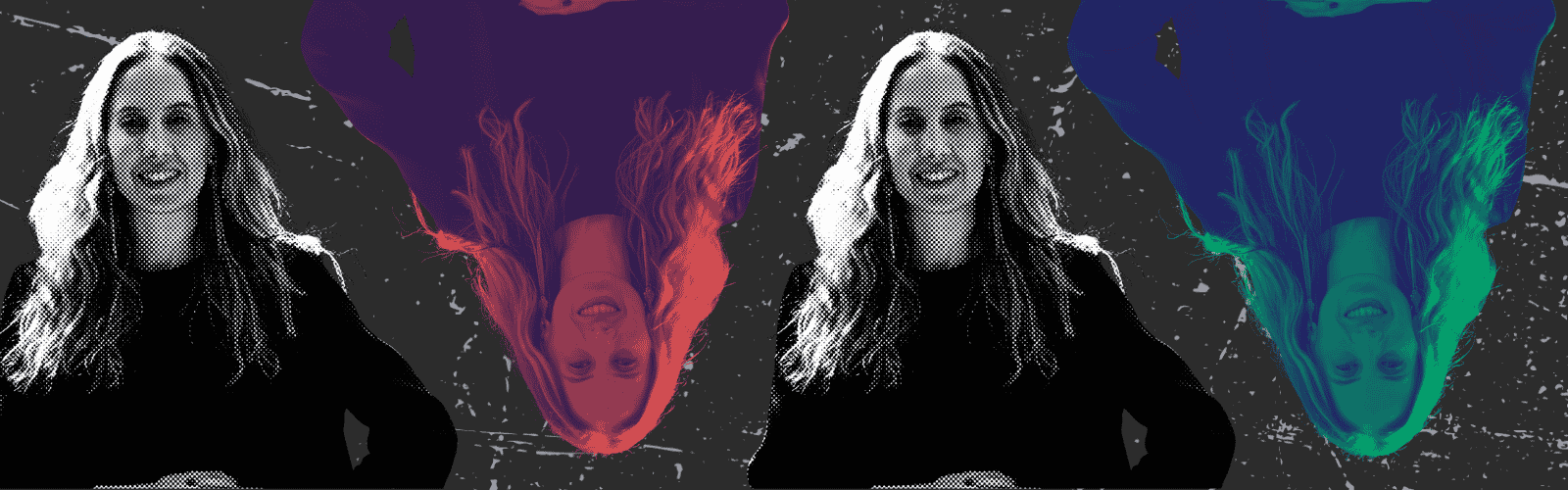
Melissa Tuplin has been a member of the community investment team at Calgary Arts Development since 2014, and is now Director of Community Investment and Impact.
She is interested in adaptive and emergent practices in program design that are informed by sector-centred research and impact measurement. Her focus is on the development of grant investment programs that are relational, relevant, and rooted in reconciliation, equity, diversity, inclusion, and accessibility.
FuN: What is your personal definition of failure?
Melissa: For me, failure is a painful reminder that no one is perfect.
FuN: What was your context before this anecdote?
Melissa: In Spring 2021, my former Director and I launched an RFP process to select a new grant management system.
I was working in the arts and public sector, leading community investment and impact through grantmaking; and our old system wasn’t keeping up. We needed better reporting, better database capacity and a stronger infrastructure.
The new system would require significant development to build out our configuration, in addition to completing data transfer and cleaning from the former platform. But after some conversations with other municipalities we knew that the benefits outweighed the amount of work.
Shortly after we signed the agreement my Director resigned.
I was asked to take on the role of Interim Director. Just 18 months after I had become the manager of the community investment department. I was personally still transitioning into being a manager of people who were formerly my peers, trying to rebuild a team, hire remotely and work within enterprise level processes.
This started a cascading series of missed opportunities and poor decisions that in hindsight could have been avoided.
🚩 The Red Flags
🚩 The first red flag was at the initial meeting with the sub-contracted software developer. It was crystal clear that our team did not share the same technical language as the developers, and that the learning curve would be extremely steep.
🚩 The second red flag was that the existing data set would require inordinate amounts of cleaning in order to be transferred. I had already initiated the process, and felt as if we had no choice but to go forward.
🚩 The next red flag was that we did not fully understand just how much hard coding the configuration would require, and it would not be as simple as the previous platform for staff to build future grant applications and reports.
🚩🚩 Some personal flags were going up for me as well. I was navigating whether or not I would apply for the permanent director role. Having one foot still firmly planted in the day to day ops and this major project made it difficult to feel as though I could zoom out and step away.
🚩🚩 Also, while in the interim role, I was continuing to serve as manager, so my focus was split on still learning how to manage the day to day operations of the department, address the pandemic impacts, be a people manager of an entirely remote team, and start to learn how to work at the executive level.
💣 The Real F*up
Melissa: The ultimate fuckup was choosing to go ahead with the transition to the new platform.
This decision led to 3 years of staff burnout, stress, lost trust, and a lack of attention and change management to the areas that actually mattered in the organization, staff wellbeing, community relationships, and strong internal infrastructure and skillsets.
I believe that this single decision had ripple effects into almost every area of leadership I was responsible for, and in some ways led to the loss of some staff members and time.
I had multiple opportunities to push the stop button in the process. We could have paused the project given the staffing transition, and waited until the dust had settled to restart.
FuN: When did you realize about this bad decision?
Melissa: It took many years for me to truly understand the scale of the impact from that failure.
I experienced each of them as an independent loss; every time the configuration process went sideways, every time the system broke, every time a staff member expressed frustration or burnout with the process, every time an applicant had a bad experience with the platform.
There were many other variables contributing of course, but time has shown me that this was a single project that could have relieved the pressures of COVID, staff role transitions, remote work, and team restructuring. Each time the platform development went off the rails, I felt like the single point of failure of putting that stress on my team, and felt a loss of trust in my decision making capacity, and that I had lost the trust of my staff.
FuN: How did you get out of that situation?
Melissa: Only Only now, nearly 4 years later is our team feeling comfortable and conversant in the system such that we are using the platform effectively, making use of its features, and not causing burnout due to low skillset.
The additional irony is that 2 years after we had entered into this excruciating process, the former platform we had been using was bought out by the new one. If we had stayed with the system we might have been supported in a better way through the transition through that buyout process.
💡 In conclusion…
Melissa: “Nothing in our work moves so quickly that we cannot stop. Nothing is so urgent that it is worth staff stress and burnout.”
💡 FUN: Urgency should not come at the expense of sustainability. Build decision-making rhythms that allow teams to pause, reassess, and protect well-being.
Melissa: “All contracts can be renegotiated.”
💡 FUN: Agreements should evolve with context. Regularly revisit commitments (internal and external) to ensure they remain aligned with current priorities, capacity, and strategic goals.
Melissa: “Just because a trusted person made a decision doesn't mean we have to continue to honor it if things aren't working.”
💡 FUN: Respecting past decisions doesn’t mean maintaining ineffective ones. Encourage teams to challenge assumptions and adapt when outcomes no longer serve the organization.
Melissa: “Fast/Cheap/Good - choose 2!.”
💡 FUN: Trade-offs are inevitable. Make constraints explicit from the start to align expectations, prioritize effectively, and avoid unnecessary pressure on teams.
Melissa: “You cannot look at projects through a single lens.”
💡 FUN: When there are multiple complex variables, risk increases, and when risk increases, core business, team wellness, and relationships take priority.











.svg)

.webp)

.png)
.png)
.png)
.png)

.png)

.png)
.png)
.png)
.png)
.png)
.webp)
.png)


.png)
.png)

.png)
.png)
%20(1).png)


.avif)

