What happens when consensus ends up paralyzing an entire organization?
This month, Jane shares a story many companies know all too well: decision-making without clear leadership.
In search of an external voice to accelerate her agency’s growth, she didn’t realize that what it would actually accelerate was the end of her role in the company and ultimately, the trust of her partners.
Want to know what went wrong? Keep reading her story...
👤 Who
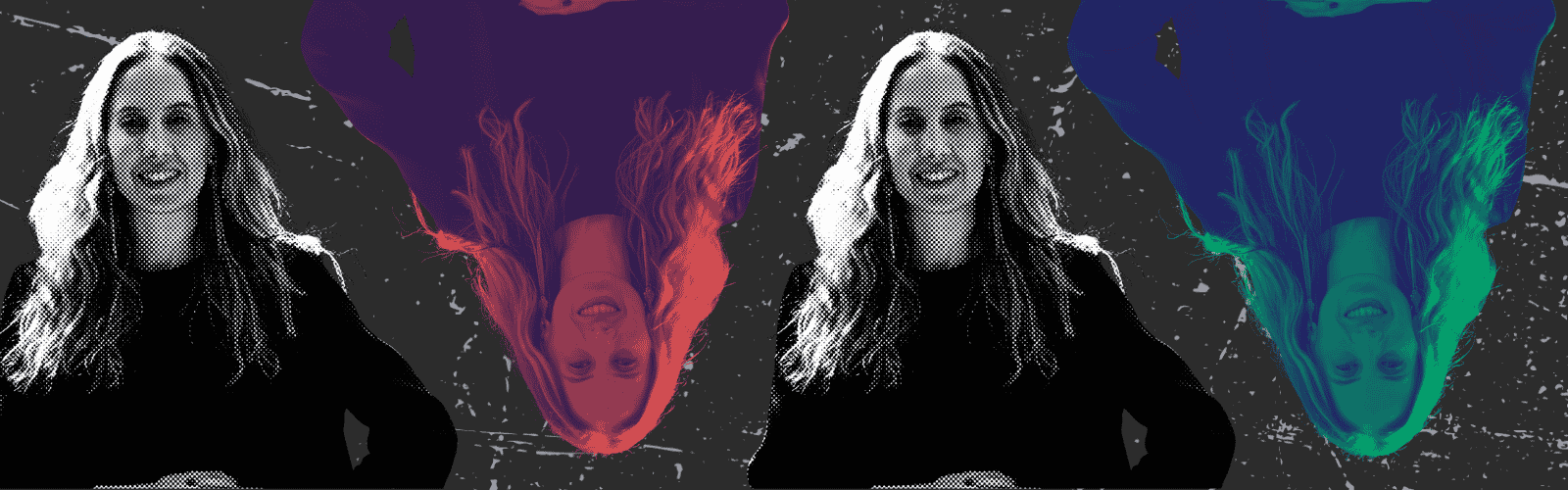
Jane Hales is a founder turned board director and co-founder coach. She turned her challenging shift from an exhausted agency operator to an active shareholder into the creation of a Co-founder Accelerator.
Now, Jane coaches others through the exact "partnership hype cycle" she lived. Her mission is to ensure other founders don't become part of the 65% of co-founder relationships that fail to survive the messy middle of scaling, helping them navigate alignment, governance, and the profound evolution from running the day-to-day operations to governing from the boardroom.
FuN: What is your personal definition of failure?
Jane: Failure, to me, isn't about losing money or missing a target. True failure is clinging to a broken organizational structure that breeds misalignment, simply because you are afraid of difficult conversations.
It’s letting ambition and drive blind you to your business’s and partnership’s needs. Failure is thinking that business fixes can somehow magically solve a broken emotional contract between co-founders.
FuN: What was your context before this story?
Jane: I was an exhausted Managing Partner of a fast-growing agency we’d rapidly scaled. We used a flat committee for decisions to show equality. I worked long hours while my stress peaked from conflict avoidance.
I felt responsible for our growth but paralyzed by our structure. I desperately wanted momentum. I wanted to swap our exhausting, slow consensus model for decisive governance.
I wanted to institutionalize growth using independent advisors. Because no single person had final control in our flat structure, decision-making was painfully slow. I was sure that heavy-hitting external voices would speed things up, break the committee deadlock, and push us toward an exit.
I treated this as the magic bullet for our growing pains.
💣 The Real F*up
Jane: I expected my co-founders to naturally adopt my vision because we had been so successful together and tried to force alignment through sheer willpower. Convinced, I brought in an external advisor to help drive our sales strategy.
I pushed too hard, too fast, within a structure where everyone thought they owned the final say. By forcing my specific growth agenda and an external voice into a fragile dynamic, I created immense tension and inadvertently fractured our trust. This accelerated the breakdown of our working relationship.
FuN: When did you realize it was a failure?
Jane: The trigger was a tense, closed-door meeting booked for two hours that lasted only fifteen minutes. A strategic proposal was slid across the table, and seeing the headline, I was in absolute shock. Our visions had completely diverged. The third co-founder looked on helplessly as the reality of our structural paralysis set in.
I calmly walked out, hiding my profound hurt. I was horrified and heartbroken. Letting go of the “hero operator” identity I’d built for 30 years felt like losing part of myself. The room felt entirely disconnected. I realized that no amount of external advice could bridge the gap; our Managing Partner structure had failed us.
The disconnection led to a full structural breakdown. My co-founder and I couldn’t even speak without a third party present to mediate, occupied completely different spaces, and attended the office on separate days to ensure our paths didn't cross. Our emotional contract was shattered, making it painfully clear I had to step up to govern from the boardroom.
FuN: What happened next?
Jane: I realized my operational leadership style, trying to drive a consensus-based committee while secretly wanting total control of the direction, was no longer serving the business or my health.
The constant tension silently sabotaged the energy in the room. When a founders' committee isn't aligned, the entire team feels the friction.
Externally, the hardest part was the perception. From the outside, we looked like a massive success story.
FuN: How was the situation solved?
Jane: We dismantled the "Managing Partner" committee entirely and implemented a proper operating system to define our structure. My co-founders finally took conventional titles (CEO and COO). I left my operational role and became an Active Shareholder and Board Director.
We replaced emotional founder disputes with a professional board structure, including an independent Chair, to ensure final decisions were made through proper governance.
If I started over, I would prioritize honest, painful conversations about our ultimate endgame on day one. I would then reconfirm and adapt them annually, as a minimum. I would define exactly who holds the reins before the stress tests the partnership.
💡 In conclusion
Jane: “Growth masks misalignment, but it never cures it.”
💡 FuN: Structural issues can exist despite growth, and can amplify over time. Regularly assess alignment across leadership, strategy, and culture to prevent scaling underlying problems.
Jane: “You can’t fix relationship problems with business tools.”
💡 FuN: Not all challenges are operational. Tackle interpersonal issues with honest conversations and clear expectations; processes alone won't solve trust or communication gaps.
Jane: “You cannot scale a business if founders are pulling in different directions without a clear ultimate decision-maker.”
💡 FuN: Clarity in decision rights is essential for scale. Define roles, responsibilities, and final accountability to ensure alignment and avoid stalled execution.
Jane: “Challenge hard, but once a decision is made, you commit—no slow sabotage. If you truly can't, you no longer belong in the operational partnership.”
💡 FuN: Debate to add value and align to execute. Build a culture of open challenge, then commit fully for clarity and speed.
Connect with Jane!








.png)


.svg)

.webp)

.png)

.png)
.png)
.png)

.png)

.png)

.png)
.png)
.png)
.webp)
.png)


.png)
.png)

.png)
.png)
%20(1).png)


.avif)

