Culture Shock and Identity
Yuliia fled Ukraine because of the war, expecting her stay in Germany to be temporary. Having worked in communications for so many years, she thought that would help her to become a part of society.
Instead, she was met with a brutal cultural clash that made her question not only her professional abilities, but even her own identity.
What happens when the professional ego that once drove your success suddenly no longer fits the environment around you?
Keep reading to discover her story.
👤 Who
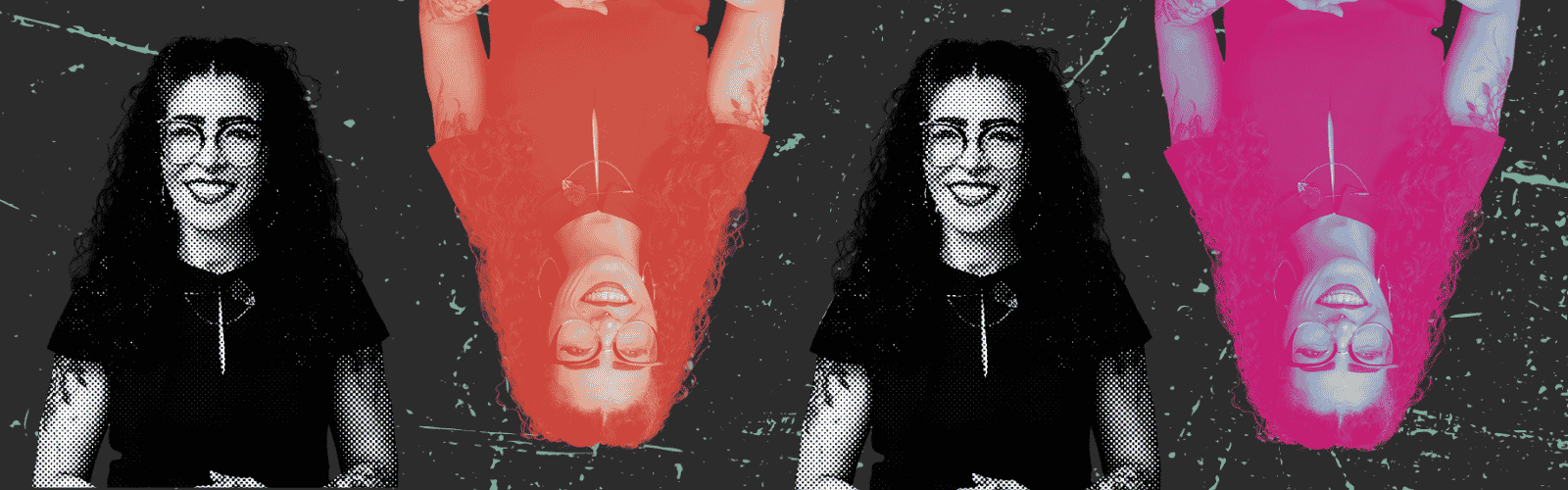
Yuliia Berhe is a Marketing Communications professional and writer with 15+ years of experience leading communication, content, and strategy projects across corporations and private businesses in Germany, Ukraine, the Middle East, and Central Asia. Alongside her professional career, writing has remained her personal passion, leading her to discover storytelling as something far beyond a business tool.
FuN: What What is your personal definition of failure?
Yuliia: It is a point where something stops working the way it used to, and you are forced to change. It is uncomfortable, painful, and even humiliating, but it is one of the most honest moments you can experience.
It shows you where you are not growing anymore, where your old ways, habits, and beliefs no longer match your reality. It removes illusions and leaves you with something very simple and very real: the need to adapt.
FuN: What was your context before this story?
Yuliia: I had built a career in marketing and communications over many years, had two degrees with honors, and a deep confidence. I was not questioning myself, living in my own bubble. I was arrogant, self-confident, isolated in my own way of thinking. I believed I understood how things work, but in reality I was much more limited than I could see.
My expectations were not small. I wanted to continue growing and building my career. I was
sure I was a professional, a superstar full of ideas and energy to fulfill them.
But then, the first uncertainty came into my life. First, it was my physical and mental health issues. Then my mother’s cancer, the war in Ukraine, and my mom's metastasis, fleeing to Germany and integration into a new society, and finally my mom's death.
By that moment, everything was already unstable, but I was still trying to hold on to some version of myself.
I was trying to rebuild my life and career in Germany without losing my professional identity. This was not just about finding work or adapting to a new country. I was trying to prove that I could go through all of this and still remain the same person.
💣 The Real F*up
Yuliia: I expected that everything I had known from Ukraine: my experience, education, and everything I had built before would carry me through. But for the first time in my life, I felt like the most stupid person in every room.
Everything I knew before did not work, everything I was strong in was not needed in this society, and my ideas and vision were not interesting, not even understood.
The reality was brutal. I had lost everything. And I mean it. In a new country, I felt like nobody and nothing, just someone with a label on her forehead: refugee.
What was at stake was not just a job. It was my identity, my dignity, and my sense of self. I was not just trying to build a career again. I was trying to prove that I am still more than what happened to me.
FuN: When did you realize it was a failure?
Yuliia: There was no single dramatic moment. It was quiet, almost invisible from the outside, but very clear from the inside. It happened through repetition.
I relied on my English, thinking it was strong enough, but for the first time in my life I realized it was actually poor in comparison with my German colleagues, and definitely not enough to express what I think the way I am used to. My German was zero, and both lack of skills affected everything: communication, confidence and presence.
I remember sitting in meetings, listening, trying to follow what is being said, and understanding only parts of it. And at the same time, knowing exactly what I wanted to say. The words felt wrong, incomplete, weaker than my thoughts.
When I was able to speak, instead of getting a reaction, people were just looking at me, not really responding, as if what I said didn’t land.
This was the collision with reality. I was slowly becoming invisible. It was not loud, but it was undeniable.
That’s when I understood, this is not a temporary discomfort. This is a failure.
FuN: What happened next?
Yuliia: Somewhere underneath all of this, there was also a moment of honesty. I could see that something needed to change, and that I could not continue like this. It was painful, but it was real.
A clear inner voice appeared: maybe this is not a failure, maybe this is a possibility to change, to make progress. Maybe the Yuliia I used to be is outdated, and that version no longer suits me. Maybe this is the right time to accept and even be grateful for this lesson.
FuN: How was the situation solved?
Yuliia: I stopped telling myself that this is temporary and that things will fix themselves. I had to admit that I am not continuing my old life, I am building a new one. And that requires different skills, different behavior, and a different mindset.
I started with small things. Language became a priority. I began to listen much more, to observe how people communicate, how decisions are made, how systems work. I stopped trying to prove myself all the time and started trying to understand.
It required patience, and it was not solved in a clear or structured way. It was a long and uncomfortable process. And honestly, I am still in this process, because we learn our whole lives, and growth is continuous.
Now I am okay with not being the best, the smartest, or perfect. I became someone new: more aware, flexible, realistic and honest with myself. I’m more open, and adaptable.
💡 In conclusion
Yuliia: "My experience and strengths are not universal. I need to adapt them to a new context."
💡 FuN: What drives success in one environment may not work in another. Encourage adaptability, continuous learning, and cultural awareness to help teams navigate change more effectively.
Yuliia: " You need to go beyond your comfort zone and fear, even when it is uncomfortable."
💡 FuN: Growth rarely happens within familiar limits. Create environments where experimentation, learning, and calculated risk-taking are supported without fear of failure.
Yuliia: "Uncertainty as a powerful space for change, growth, and even beauty."
💡 FuN: Periods of uncertainty can unlock innovation and transformation. Leaders who embrace ambiguity with openness and clarity help teams adapt with greater resilience and creativity.
Yuliia: " Collapse doesn’t destroy you, it destroys your ego and comfort zone to push you forward."
💡 FuN: Setbacks can challenge assumptions and accelerate growth. Organizations that treat failure as a learning process build more self-aware, adaptable, and resilient leaders.








.png)


.svg)

.webp)

.png)
.png)
.png)
.png)

.png)
.png)
.png)
.png)
.png)
.webp)
.png)

.png)
.png)
.png)
.png)
%20(1).png)


.avif)

