Salo had it all: a senior role at Facebook, stability, and a fast-rising career
But his desire to accelerate his destiny led him to bet on a startup that promised to change the world.
At some point in our personal or professional lives, we’ve all faced that terrifying question: What do I do now? Salo encountered it at the most defining moment of his life, when he became a father for the first time.
👤 Who
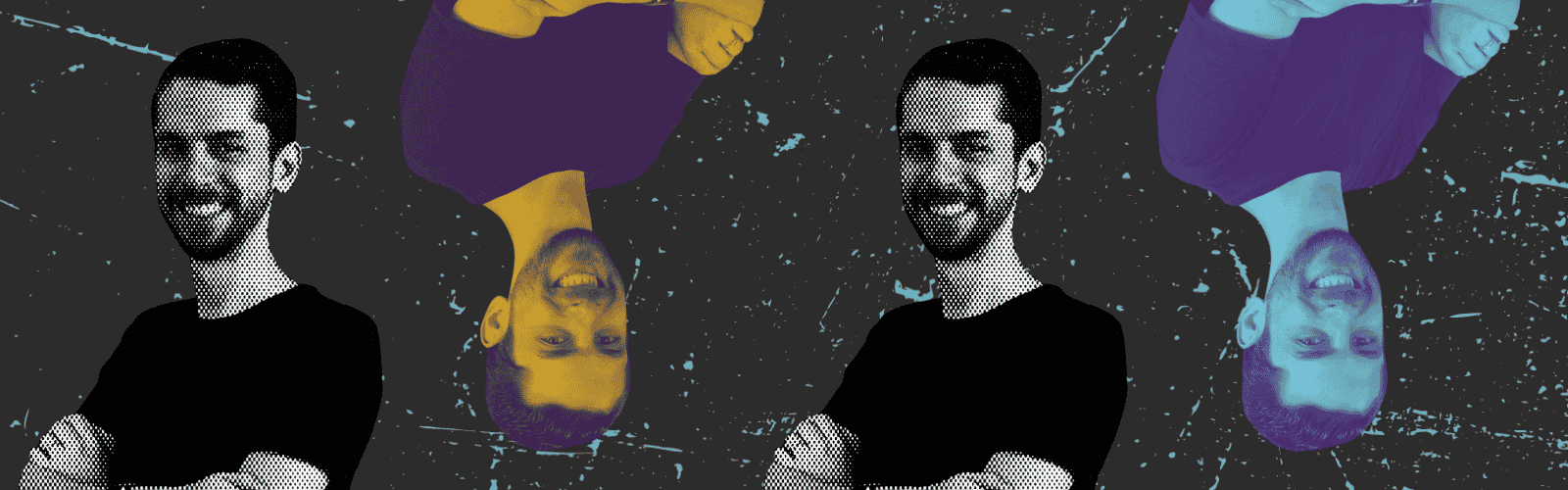
Salo Woldenberg is Senior Director of External Affairs at Stori, a Mexican technology company that provides financial services to 4 million people and where he works to promote financial inclusion. He is dedicated to building bridges between government, regulators, the private sector, and strategic initiatives so that more people can access better financial services.
Before that, Salo spent several years in public service and later joined Facebook. His career has always been driven by one obsession: finding where he can create the greatest real-world impact in Mexico.
FuN: What is your personal definition of failure?
Salo: It’s making a major decision with conviction, armed with what seems like enough data and the feeling that you’re doing the right thing, only to later discover you were completely wrong about the real risk involved. Failure isn’t just when something goes wrong. It’s realizing that your ambition, your urgency, or your ego made you underestimate the cost of a bet.
Real failure doesn’t just hit your results; it confronts you with who you were when you made the decision.
FuN: What was your life like before this story?
Salo: I was deeply happy. I had spent nearly seven years in public service, convinced that my calling lay in government and in building institutions.
I then moved to Facebook to lead government relations and public policy in Mexico during a delicate political transition. I grew professionally, took on more responsibility, earned a great salary, traveled, got married, and felt my career was on track.
But I still wanted to make the big leap. I was invited to join a project that, on paper, seemed like a once-in-a-lifetime opportunity. It was a company promising to transform urban mobility and go public on Nasdaq.
The narrative was spectacular: young leaders, global expansion, and the promise to reinvent bus travel, like Uber did for cars. It felt like a historic opportunity; greater impact, faster growth, international reach. I wanted to accelerate my destiny..
💣 The real screw-up
Salo: I mistook an electrifying vision for a wise gamble. I got seduced by the epic scale of the project, the size of the dream, and the speed at which everything seemed to be happening.
There were warning signs: a cooling market, dependence on aggressive capital, and a cracking SPAC route. But I wanted to believe.
On top of that, I made the decision during an extremely delicate moment in my personal life: before fully understanding what it meant to become a father. I took the risk as if I were still only responsible for myself.
FuN: When did you realize it had been a mistake?
Salo: I realized it at the worst possible moment. My first daughter was born on March 16. I resigned from Facebook on March 30 and started my new job in April. I saw the Nasdaq bell up close and the promise of a new life. I sold my apartment in June.
Shortly afterward, before I could settle into the project, I was laid off with the entire Latin America team. The CEO cried during a massive company call, saying he had failed. I felt like my world was collapsing.
I went from entering my career’s most ambitious chapter to realizing I had blown up my stability right when I needed it most.
FuN: How did you deal with that news?
Salo: I felt empty and guilty. It wasn't just fear for my professional future; it was the feeling that I had failed as a husband, as a father, and as a provider, just as my daughter had come into the world.
I was ashamed that I had left an extraordinary job for a bet that went wrong so quickly and so badly. It hurt to admit something deeply uncomfortable: I wasn’t a victim of circumstance; I had made that decision myself. Some mistakes don’t just break your plans; they break your identity.
The hardest conversation was with my wife. She supported me, but it was brutal. I had imposed uncertainty, fear, and emotional exhaustion on the person who trusted me most.
In fact, later on, when the opportunity to join another startup (Stori) came up, the hardest person to convince was my wife. And she had every right to distrust me.
FuN: How did you get out of that situation?
Salo: First, I had to accept that I couldn't just freeze up. I had to act quickly, get back into my routine, ask for help, reach out to my network, and get back on my feet emotionally.
I found another job a few months later, but more importantly, I found meaning.
I joined Stori after meeting Marlene Garayzar, CGO and Co-Founder, and found something unexpected: a mission in financial inclusion. The massive screw-up forced me to reinvent myself. I lost a shiny success narrative and found a deeper calling. Sometimes losing the “perfect” path is the only way to find the right one.
💡 Key Takeaways
Salo: “Not every brave risk is a smart risk.”
💡 FUN: Bold decisions require clear evaluation. Encourage teams to balance ambition with data, timing, and operational readiness before committing to high-impact risks.
Salo: “A spectacular story does not replace strong fundamentals or financial discipline.”
💡 FUN: Storytelling may attract attention, but sustainable growth depends on operational strength. Prioritize sound fundamentals, financial visibility, and disciplined execution over short-term momentum.
Salo: “Ambition without timing can become irresponsibility.”
💡 FUN: Strategic timing matters just as much as vision. Leaders must assess market conditions, organizational capacity, and team readiness before accelerating growth or expansion.
Salo: “The hardest failure can force you to find your true calling.”
💡 FUN: Professional setbacks often create opportunities for reinvention. Organizations that make reflection and learning after failure the norm help people discover their strengths, adapt more quickly, and grow with greater clarity.
Connect with Salo!










.svg)

.webp)

.png)
.png)
.png)
.png)

.png)
.png)
.png)
.png)
.png)
.png)
.webp)
.png)

.png)
.png)

.png)
.png)
%20(1).png)


.avif)

