## From dance to crash: redefining failure
Miriam had a stable life, a secure job, and a passion that had been with her since childhood: dancing.
That passion inspired her to leave behind stability and open her own fitness studio. Everything seemed to be going even better than she had imagined... until a car accident changed her life in a matter of seconds.
What happened next forced her to redefine what failure really means.
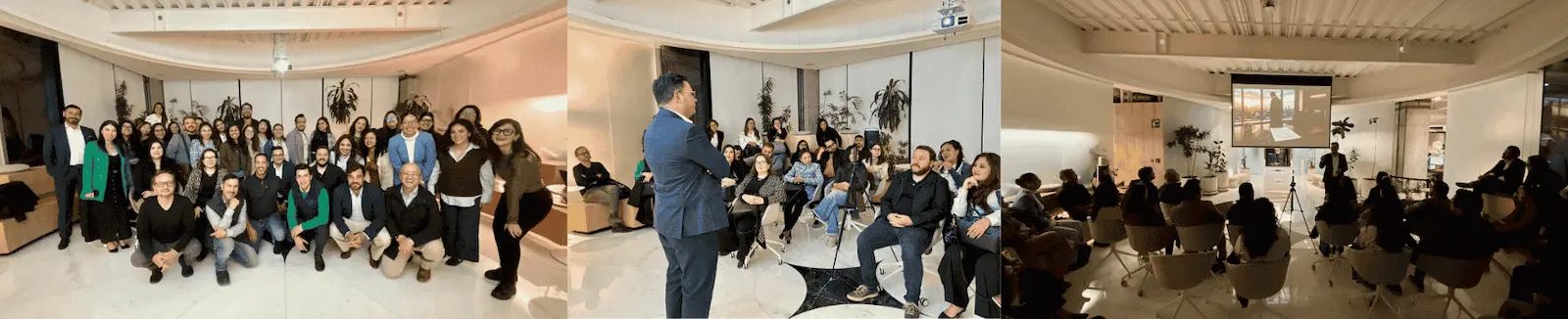
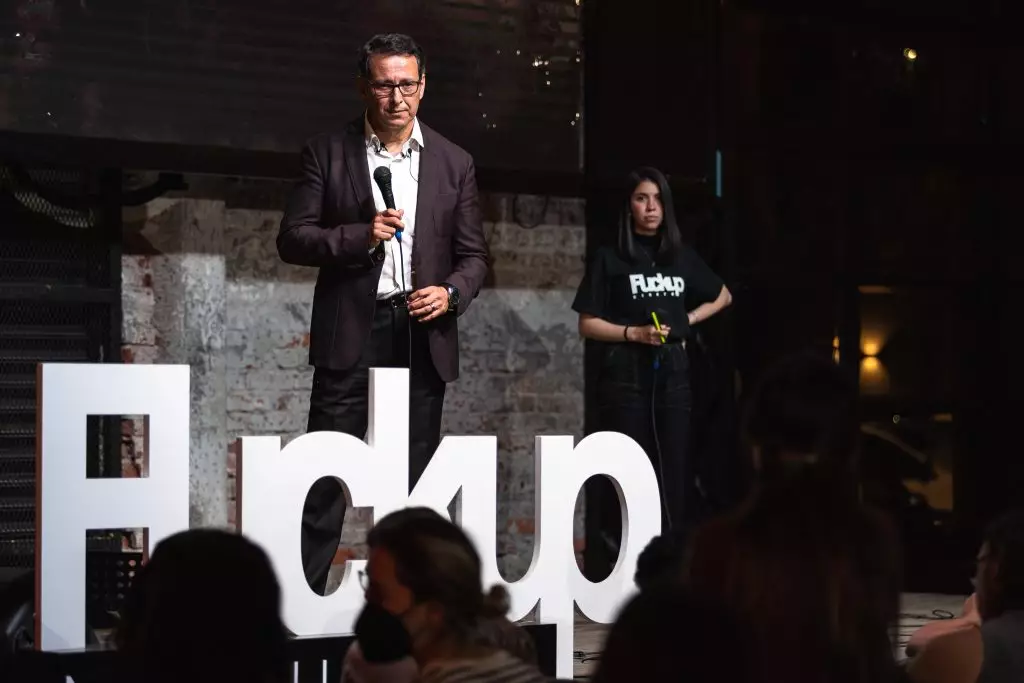
This story comes from Fuckup Nights San Luis Potosí, Mexico. Thank you for sharing it with our global community. Congratulations on your 7th edition, and don't forget to follow them so you won't miss future events!
Keep reading to discover Miriam's story.
👤 Who
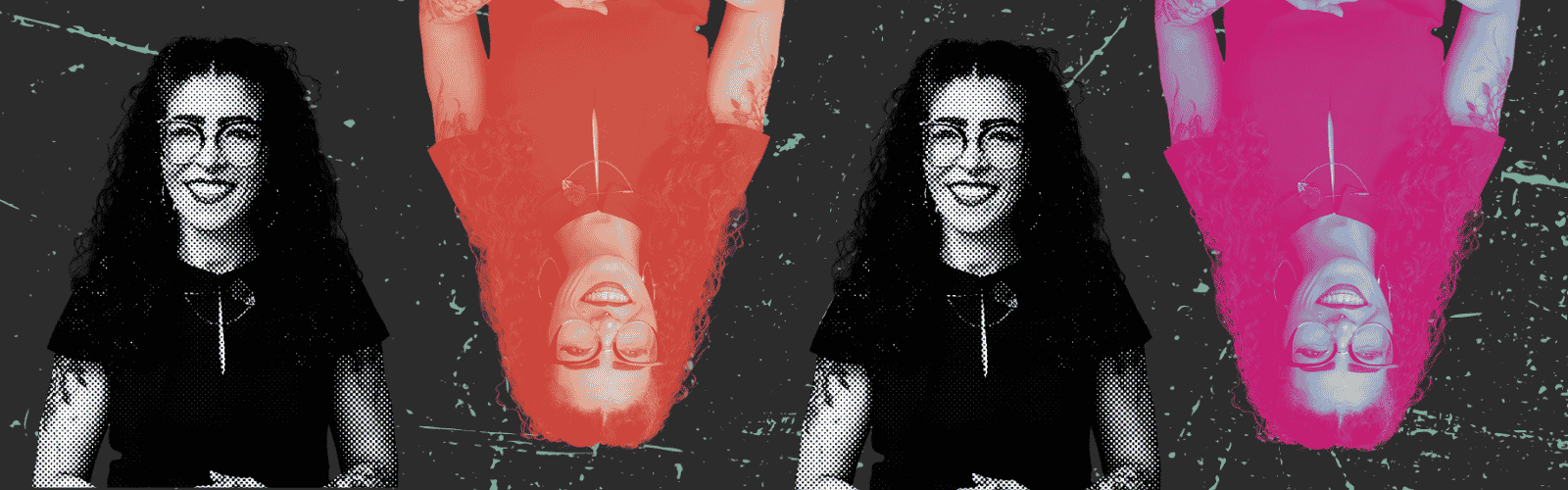
Miriam Carranco is a communications professional with a Master's degree in Business Administration and Marketing, and more than 15 years of experience in talent development, leadership, and sales across Mexico and the United States.
She created the program "Potencialízate: Discover Your Competencies" and, in 2025, received a scholarship from the European Open Business School to pursue a Master's degree in Human Capital and People Development with a specialization in Neuromanagement.
FuN: What is your personal definition of failure?
Miriam: To me, failure isn't the accident or the external setback. Real failure is stopping believing in yourself, giving up too soon because of fear, and allowing a lack of structure to destroy something you built with so much love.
FuN: What was your life like before this story?
Miriam: In 2009, I was a corporate employee with a stable life. I worked in an industrial park, had fixed hours, a steady paycheck, and a passion that had been part of my life since I was seven years old: dance. Even though my weekdays were structured around office work, I always made time for ballet, jazz, and fitness.
I wanted to take that passion to the next level. My instructor suggested I become Zumba certified so I could take over a class of ten students she could no longer manage. What started as a small group grew rapidly. Within a few weeks, we had gone from 10 to 30 students.
That's when I had a dream: to build the most successful fitness business of my life. I rented an entire building with two professional studios, bought equipment, mirrors, and weights, and eventually had classes with up to 50 students at the same time. I felt like I had made it. I paid for my master's degree, traveled to Hawaii and Europe, and was completely debt-free.
💣 The real screw-up
Miriam: Success blinded me. I never built a proper structure for the business. I never appointed a general manager or implemented financial and administrative controls. I was the entire system: the energy, the leadership, and the constant presence.
My management style was built entirely on trust. I even gave every instructor a key so they could come and go without supervision. When a system depends on just one person, it's incredibly fragile.
FuN: What was the turning point?
Miriam: It was both a literal and figurative blow in November 2014. I was sitting in my car, singing at the top of my lungs while waiting at a red light, when a truck decided not to stop and crashed into me.
I woke up in the hospital, having lost all sensation on the left side of my body. My true collision with reality came when the doctor ran a spiked wheel across my skin, and I realized I couldn't feel a thing.
FuN: How did you react to the situation?
Miriam: I felt overwhelming frustration and anger. I was swollen from the cortisone, depressed, and terrified. My biggest fear wasn't the physical limitations; it was the identity crisis. Who was I without my business? Without dancing? I started making decisions driven entirely by fear and anxiety.
My instructors kept sending me individual reports, but without my presence, attendance dropped while expenses kept rising. My entire family encouraged me to be patient, recover first, and then rebuild. But I didn't listen. Out of fear of failing again, I walked away from everyone who believed in me.
FuN: How did the deal turn out?
Miriam: I gave up. I decided to shut the business down and practically handed it over to one of the instructors under a payment agreement that was never fully completed, and I never pursued it. I stayed stuck: angry, depressed, and convinced that one difficult moment had to become the end of my story.
Today I know that if I had been patient, I could have returned to supervising the business within three months and teaching again within six. I wish I had understood that success without systems is fragile and that asking for help isn't a sign of weakness. It's a strategy.
💡 Key Takeaways
- Structure isn't optional: A business that depends entirely on your physical presence isn't really a business; it's a fragile form of self-imposed dependency.
- Delegate and create oversight: You can't be the only leader. Build backup leadership and financial systems that allow the business to survive without you.
- Don't make decisions from fear: Intense emotions (anger, grief, anxiety) are terrible advisors. Before closing a chapter, pause and make decisions from a place of emotional clarity.
- Learn to ask for help: You don't have to control everything. Leaning on your support network (family, friends, mentors, or business partners) can save years of hard work.
Connect with Miriam!
Instagram | Facebook | LinkedIn | Courses and Certifications










.svg)


.png)
.png)
.png)
.png)
.png)
.png)
.png)
.png)
.png)
.png)
.webp)
.png)

.png)
.png)
.png)
.png)
%20(1).png)


.avif)
