Join our network to receive updates on local events and exclusive stories about failure and growth.
You're now part of our global community! You'll be the first to receive updates about upcoming events near you, delivered straight to your inbox. Plus, you'll get access to our special selection of the best failure stories of the month.
Oops! Something went wrong while submitting the form.
These are the tips and mental models I've used to help me get by when things get tough.
By:
Pepe Villatoro
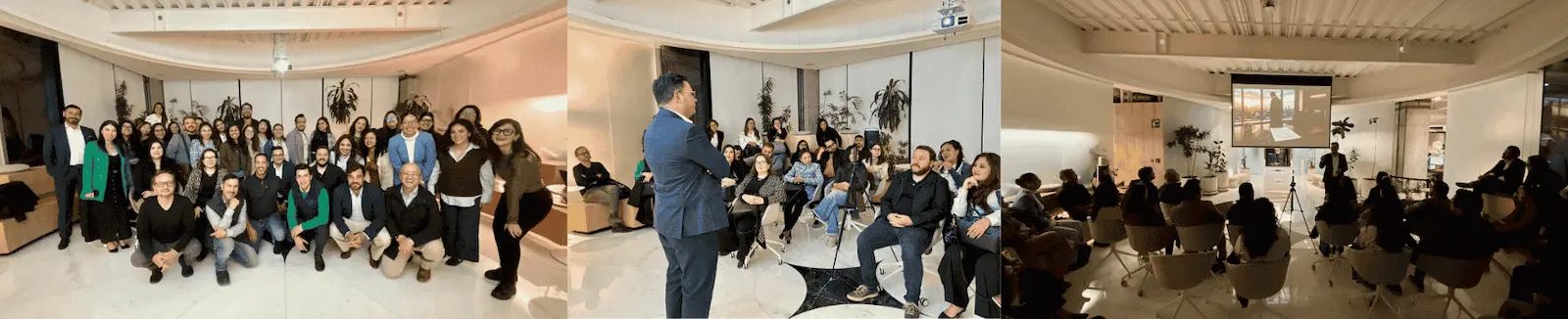
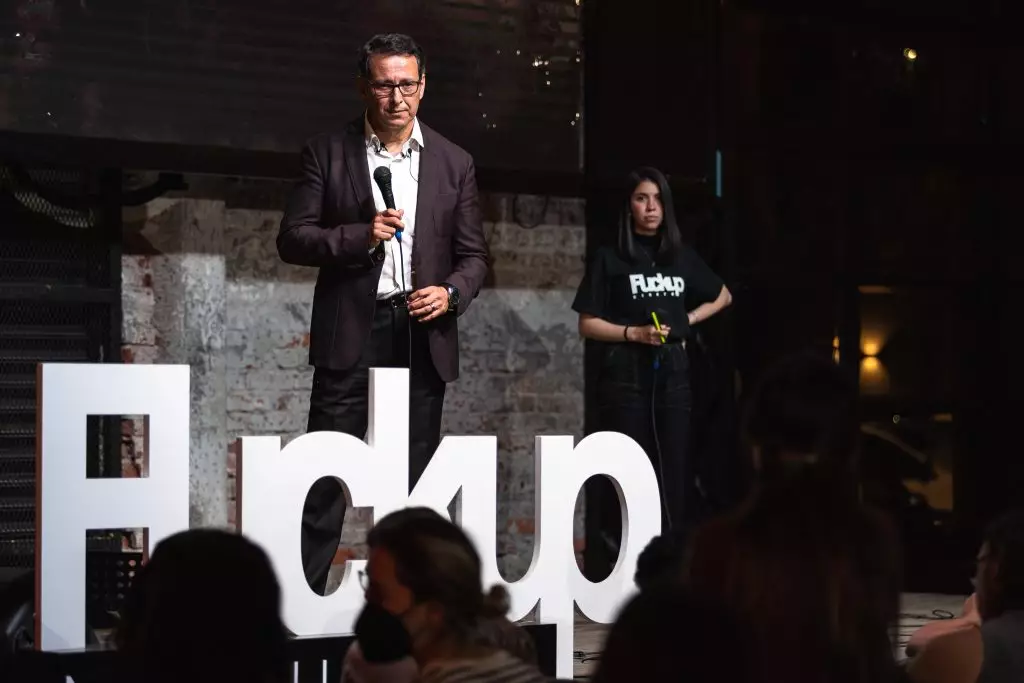
I was recently invited to give a presentation to college students and young professionals on how to stay resilient during times of crisis. Given their positive response, I decided to write these tips down; I hope you find them helpful as well.
There’s a phrase often attributed to Winston Churchill:
Success is not final, failure is not fatal: it is the courage to carry on that counts. - Winston Churchill
Most people focus on the second idea: “failure is not fatal.” But right now, I’m , more interested in the first part: “success is not final.” Change is the only certainty. We never know when an earthquake, pandemic, dictatorship, accident, bad luck, or bad news will strike. So what can we do to make these difficult times a little more manageable?
I’m n’t an expert, but I do consider myself a happy person. I’ve managed to stay (more or less) grounded throughout the various family, financial, and professional crises I’ve gone through. These are the tips and mental models I’ve used to help me get by.
Change the paradigm
Internalize the idea that failure is not an identity; it’s just a temporary situation. Failing at something doesn’t mean you’re a failure or a loser—it just means you’ve experienced a setback. It’s also important to realize that everyone either experiences failure or falls short of expectations (their own or others’) at some point in their lives. Society celebrates the extremes—the richest, the most beautiful, etc.—and it’s easy to believe that everyone else is doing great. But it’s likely that even the people who appear to be super successful are miserable behind the scenes. Don’t aspire to live a filtered version of life.
There are people who energize you when you talk to them, and people who drain your energy. In these difficult times, surround yourself with people who energize you. Friends who see the glass as half full and all the possibilities it holds will help you get through any tough time in a creative way.
Get Perspective
Investing time and energy in things you can't control—politicians, the weather, how others choose to act, and so on—will only make you angry and frustrated. Instead, focus on what you can control, such as how you react, how you treat others, or the activities you take part in.
Unplug. Go offline. Protect yourself from the constant stream of negativity, comparison, clickbait, and fake news on TV and the internet. We aren’t built to handle that overwhelming amount of crap. I try to fully disconnect during meals, meditation, exercise, and one hour before bed. I’ve found that the less time I spend in front of screens (especially social media), the happier, more creative, and more productive I become. I also make better decisions and end up investing my time in things that matter to me.
When you're online, try to seek outwisdom and knowledge, not just information. Most of us grew up in societies that value being informed—and by "informed," they mean reading the newspaper and watching the news. The problem is, in their attempts to grab our attention by any means necessary, most media outlets have simply become noise.
Recently, I’ve made a greater effort to be aware of when I’m mindlessly scrolling through social media. That’s my cue to put my phone away and pick up a book. For me, cutting back on my news and social media consumption and reading books instead helps me think more clearly and is much more productive in the long run. Getting insights from super smart people and learning from their life experiences in just a few hours? Yes, please!
Know yourself. You might surprise yourself with just how cool you are. One of the things that has helped me the most with this is positive psychology. I’m , a sucker for pop-psych books with one-word titles, orange covers, and Ivy League authors who all use the same formula and cite the same research. But in all honesty, positive psychology has helped me build habits and change the way I react in difficult situations. Plus, dipping my toe into pop psychology eventually helped me dive into self-awareness, Buddhism, and deeper topics… which are even better.
Another trick I’ve developed to gain perspective is to think about my parents. Lately, I’ve been talking with amazing people from countries that haven’t necessarily come out on top over the last 500 years—think colonized rather than colonizers. During these conversations, it’s become clear that one thing we all have in common is parents who lived through some serious shit: dictatorships, poverty, war, hyperinflation and currency devaluations, interventionism, apartheid, and so on. When I think about this, I’m reminded of my privilege and feel energized to keep helping others and changing the system to leave a better world for future generations.
Clear your mind
Don’t make decisions when you’re feeling down (or hungry). I guess this one doesn’t need much explanation. Have a snack and sleep on important decisions.
Exercise. Get active. Humans didn’t evolve to sit on the couch and order takeout. For our bodies and brains (and emotions!) to function properly, we need to move. If we don’t get our physical energy in order, our intellectual, creative, and spiritual energies also become sluggish.
Create an alter ego. Sometimes—and especially in times of crisis—we have to do things we don’t want to do or that we think we’re not good at. Maybe Pepe Villatoro is struggling to have That Tough Conversationwith his team, but what about Batman Villatoro? (Sorry, I haven’t named my alter ego yet, but imagine a mix of Maya Angelou and Iron Man.) I understand this point might sound a bit superficial when things are awful, but sometimes it can be powerful to approach problems as challenges or games.
Think long term
When I’m ’m feeling angry or down because things aren’t going well, I ask myself: What will I think about this 10 years from now? The answer is usually one of two things: Either it’ll be something to laugh about or a good story to tell. This helps me avoid getting too caught up in negative thoughts and start thinking in a more stoic way, in line with my principles.
Act as if your decisions were going to be in the newspapers tomorrow. This perspective will help you think twice and take a deep breath to avoid acting on impulses that don’t truly reflect who you are.
Focus on your purpose and values, and shape your life. I know this sounds a bit vague, but it’s the most important thing I’ve done in my quest to live a more fulfilling life. It’s easy to just go with the flow and do what society and its marketing machines tell you to do—consume and accumulate.
But what if that capitalist nonsense isn’t what you truly value? What do you actually want your life to look like? Until you start answering these questions, you’ll keep running around like a headless chicken, living the life that someone else designed for you.
Pepe Villatoro is a globally recognized serial entrepreneur. He has founded five companies and served as Regional Head of Expansion for Southern Europe and Northern Latin America. Currently, he works with governments and companies to help bring about a shift in mindset. He loves to travel, enjoy a good meal, and have meaningful conversations.








.svg)

.webp)

.png)
.png)
.png)


.avif)
.avif)


.avif)


.avif)
.avif)


.avif)


