From the Brink of Selling to Twitter to Total Collapse: Samir's Story
After years of building his startup, Samir was one meeting away from selling his company to Twitter.
The negotiations were moving forward, and everything pointed to the biggest moment of his career.
Then, one email sent him down a path that success alone could never fix.
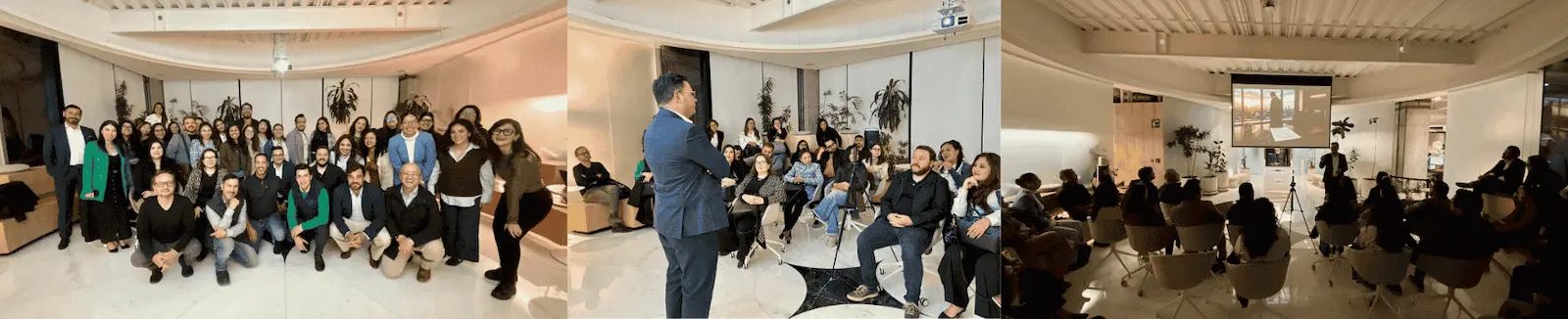
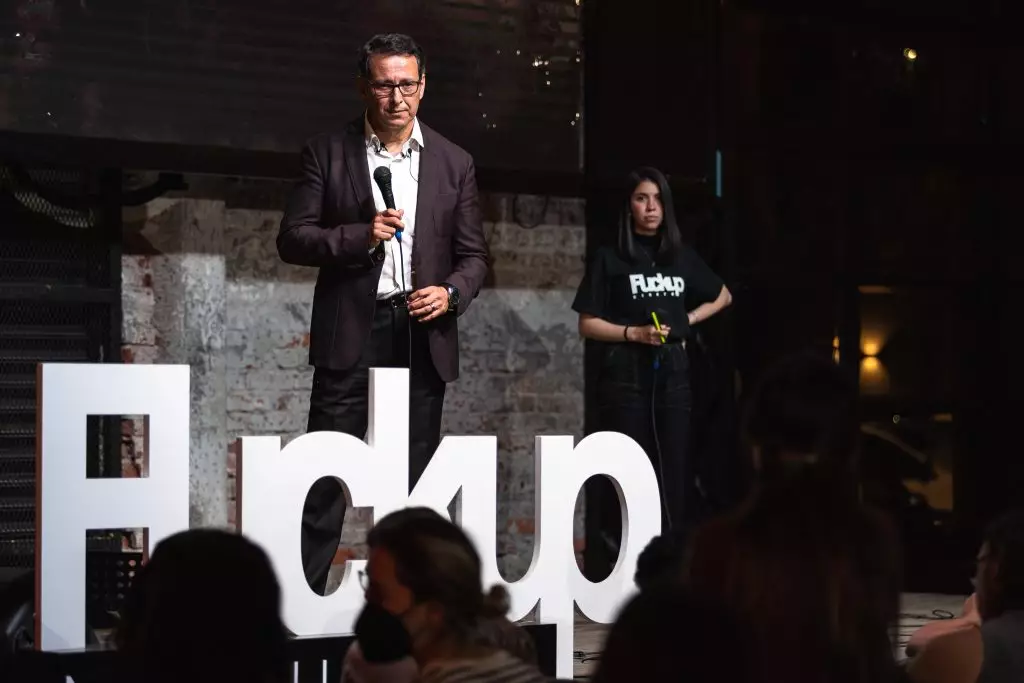
This story was shared by Fuckup Nights Chicago, USA. Many thanks to the local team for sharing their story with our global community. Don’t forget to stay tuned for their upcoming events here.
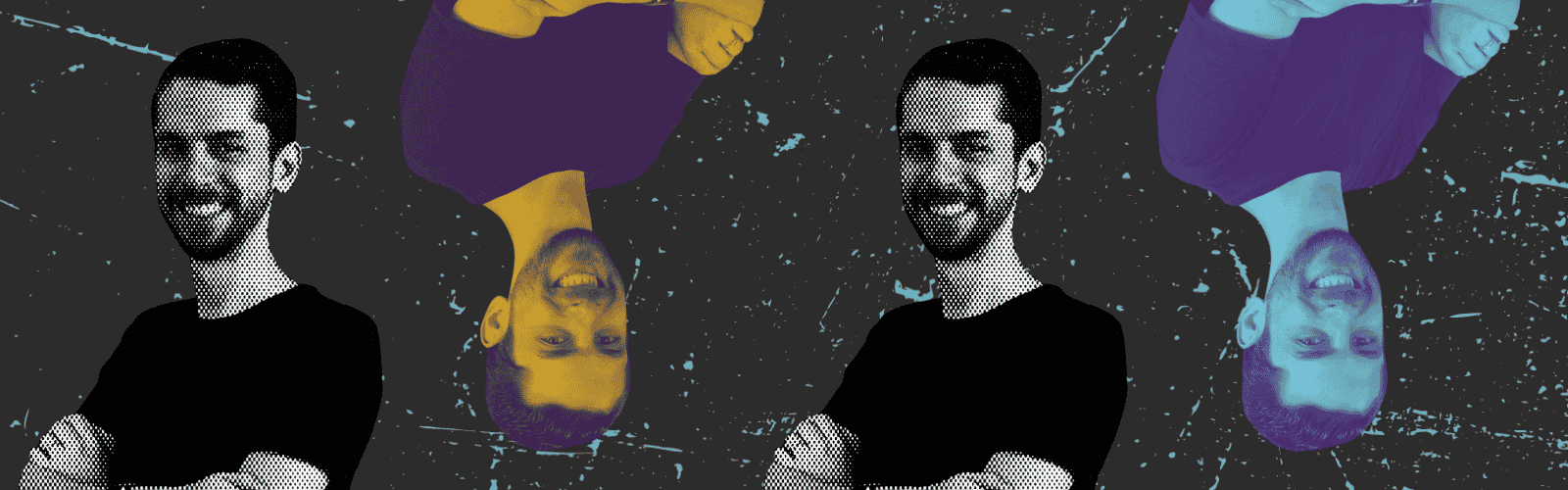
👤 Who
Samir Mirza is the Vice Chair of Pie, a social IRL app which makes doing things you like with people you enjoy as easy as pie. He previously co-founded TapCommerce, the first mobile ad retargeting platform, and co-founded Fifth Star Funds, one of the Midwest’s most active funds investing in underrepresented entrepreneurs.
At Twitter in San Francisco, he led engineering teams, scaling annual revenue to $300M. He later lived in Berlin, teaching code at the ReDI School for Refugees, consulting for the Norwegian Refugee Council, and advising startups as a Techstars Entrepreneur in Residence. Based in Chicago, Samir continues to champion inclusive innovation. He holds a CS degree from UIUC and an MBA from NYU Stern.
FuN: What's your relationship with failure and success?
Samir: My parents are Indian immigrants who moved to the US in the '80s. They came from really humble beginnings - my father was born into poverty, and my grandparents couldn't read or write.
As I was growing up, I really internalized this struggle and the sacrifices that my parents made for me. It was as if their hard work for me was a debt that I had to pay down.
I always felt this pressure to succeed - to make their sacrifices worth it. This manifested in me as a deep insecurity since I was constantly comparing myself to others.
It always seemed that money was the most important thing to my parents. And so, I knew if I wanted to maximize my parents' love for me, I had to succeed, and I had to do well.
So, how do you make a shit ton of money in America and also gain the respect of others? You start a tech company.
FuN: What was your context before this story?
Samir: The year was 2010. The App Store had only been around a couple years, and my co-founders and I felt like the next big tech companies were going to be mobile.
So, we went through a lot of pivots, and eventually built what became TapCommerce, the industry’s first mobile ad retargeting platform. I was in my mid-20s when I was building it.
But deep down, I struggled with imposter syndrome: Am I good enough to be an entrepreneur? Am I good enough to be in the room? Am I ready to be doing this?
We started to gain some traction. We raised a seed round, and that caught Twitter's attention.
We were showing ads on different platforms, and Twitter reached out to see if we could partner to show ads on their platform. So, we flew from New York to San Francisco.
We met with them, and the partnership meeting went really well. At the end of the meeting, they said:
"Instead of flying back to New York tomorrow, we think we might actually just want to acquire you guys. So, if it's okay with you, would you stick around for one more day?"
We looked at each other, trying to maintain our cool, and said, "Yeah, we suppose we could stay."
But inside, we were thinking: "Holy shit! This is our dream: to sell our startup to an iconic tech company."
💣 The Real F*up
Samir: Then the next day came, and we went back to Twitter's office.
My co-founders had a series of sales and product meetings that were pretty straightforward.
But as the CTO, my meetings were these intense technical engineering interviews, with questions about statistics, algorithms, and brain teasers.
After each meeting, I felt terrible. I felt like I was bombing each one. By the end of the day, I felt like crap.
I regrouped with my co-founders and told them I wasn't sure about this. They told me not to worry, that I was just being hard on myself.
So we flew back to New York, and a week later Twitter got back to us. I still remember the email vividly, as if I had received it today:
"We're not moving forward with the acquisition, and one of the main reasons why is that your co-founder, Samir, did not do well in his interviews."
FuN: How did you react when you heard the news?
Samir: My failure wasn't not getting acquired. My failure was how I let that fuckup define me in the years that followed, which eventually led to severe depression and burnout.
It was the first time in my life where someone explicitly told me I wasn't good enough, and it was also the moment where I failed in achieving my childhood dream. My imposter syndrome and feelings of insecurity were validated.
I then embarked on a path of making work my entire identity. I stopped seeing my friends and family. I stopped taking care of my health and I let all my hobbies go.
All I knew was work. All I felt was that I had to make this succeed.
My entire sense of self-worth and humanity depended on this company succeeding. I felt there was no other option.
FuN: How did you try to recover from it?
Samir: Long story short, we ended up being acquired by Twitter a few years later - for a much higher valuation than before.
They gave us time to prepare, and I crushed those interviews. I thought I had conquered my failure. I thought I had finally succeeded.
But after just a few months, I felt empty inside. More deeply, I felt like a fraud. I felt like Twitter had been right the first time and had made a mistake the second time.
I felt like my co-founders and the rest of the team deserved this success, not me. My childhood insecurities did not go away and my imposter syndrome deepened.
After a few years, I eventually left Twitter. After feeling consumed by shame and insecurity, I decided to devote my life to social impact and level the playing field for others in tech.
Despite helping to build a refugee coding school in Berlin and co-founding a fund to close the funding gap for entrepreneurs of color in Chicago, that deep depression started to creep into my life.
I thought I was doing meaningful work, but I couldn't understand why I was so depressed. It became so severe that I couldn't function at work, and I had to step down from the fund.
On top of that, my ex-wife told me she wanted to leave me. My marriage fell apart.
The two biggest pillars in my life - my identity as an entrepreneur and my marriage, the two things that mattered most to me - were suddenly gone.
FuN: How was the situation solved?
Samir: I hit rock bottom and my thoughts became very dark. I didn’t know what to do. All I knew was how to build so I finally thought: what if I applied an entrepreneur's mindset to what I was experiencing?
I told myself, Okay, let me iterate, pivot, and try different things to climb out of this darkness.
I started therapy, journaling, and writing poetry. I started working with a trainer and saw how my physical health was directly tied to my emotional health.
But the most important thing was community. For so long, I had tried to be perceived as self-sufficient and high-functioning.
But I realized I couldn't do it on my own anymore. I opened up to my close friends and family. I told them that I was not okay and I needed to rely on them to get through this.
Eventually, I met Sidrah, my soulmate. I figured out how to love myself, and that allowed me to open my heart to fall in love again. We got married, and we just had our baby daughter. The life I live now feels worlds away from where I was just a few years ago.
The shame I carried has faded, and my sense of pride has grown. I'm proud of my prior versions of Samir. I'm proud of what I built. I'm proud of what I did in Germany. I'm proud of the fund I helped build in Chicago.
But I also learned to center other parts of my identity. Work is no longer at the center.
I'm a father, a husband, a friend, and a community builder.
These are the new parts of my life I've chosen to nurture. I finally feel like I love myself not because of what I do, but because of who I am.
💡 In conclusion
“Don’t let one failure define your identity.”
💡 FuN: A failure is an event, not an identity. Create cultures where setbacks are treated as learning opportunities, helping people reflect, adapt, and move forward without being defined by one outcome.
“Professional success cannot fix internal insecurity.”
💡 FuN: Recognition and achievement don’t replace self-awareness. Encourage leaders to invest in reflection, feedback, and personal development—not just professional performance.
“Making work your entire identity comes at a high cost.”
💡 FuN: A sustainable culture makes room for life beyond work. Encourage boundaries, time away, and interests outside the workplace to help people maintain perspective and long-term engagement.
“Recovery is a process of experimentation, not a single breakthrough.”
💡 FuN: Recovery rarely follows a straight line. Give people space to test new routines, approaches, and ways of working until they find what helps them perform sustainably.
“Community and a broader sense of identity are essential for resilience.”
💡 FuN: Resilience grows through connection. Build communities where people can find support, share experiences, and develop identities beyond their roles at work.
Connect with Samir!
Instagram — https://www.instagram.com/svmirza
LinkedIn — https://www.linkedin.com/in/svmirza
Twitter / X — https://x.com/svmirza








.png)


.svg)

.webp)

.png)
.png)
.png)

.png)
.png)
.png)
.png)
.png)
.png)
.webp)
.png)

.png)
.png)
.png)
.png)
%20(1).png)


.avif)

