Join our network to receive updates on local events and exclusive stories about failure and growth.
You're now part of our global community! You'll be the first to receive updates about upcoming events near you, delivered straight to your inbox. Plus, you'll get access to our special selection of the best failure stories of the month.
Oops! Something went wrong while submitting the form.
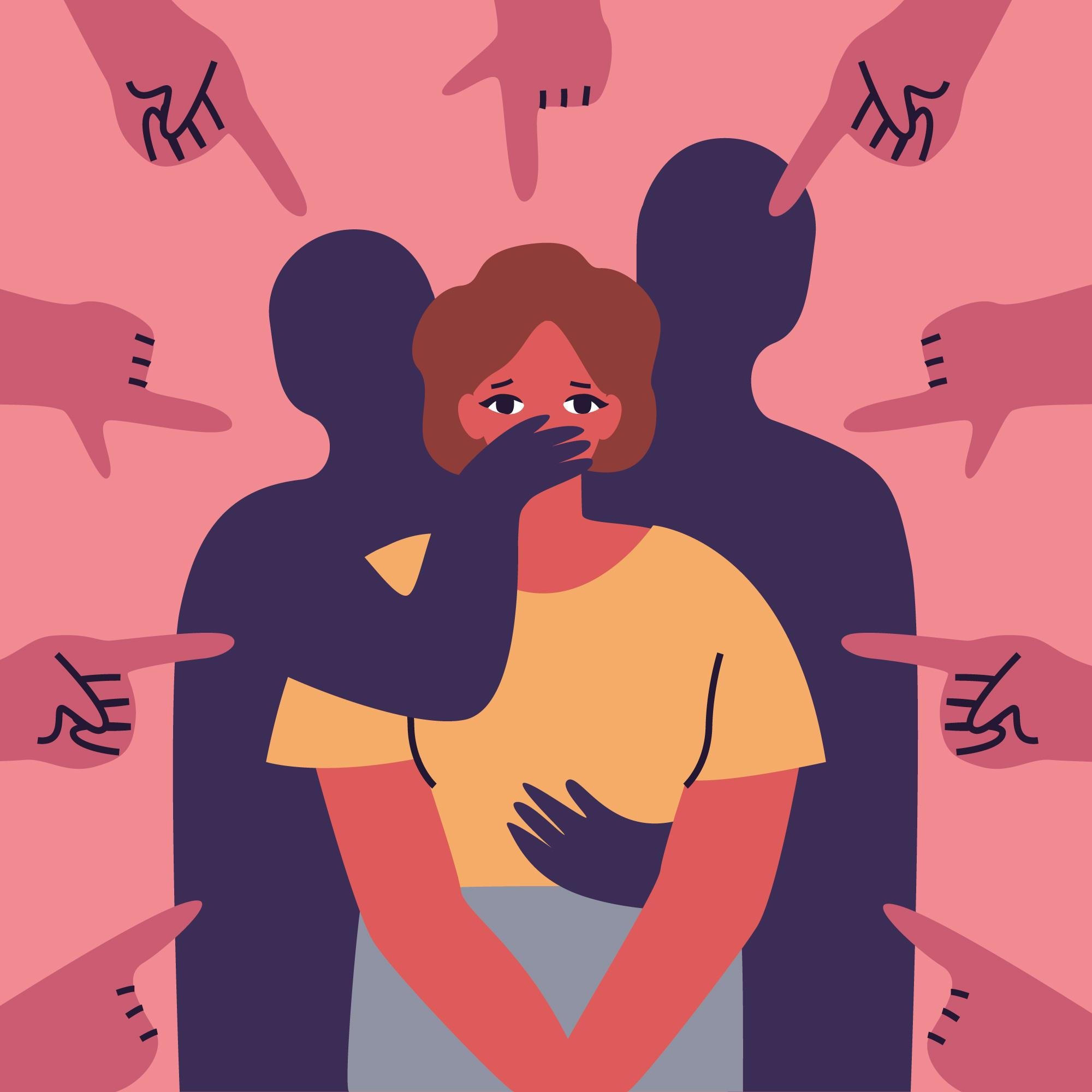
Ever since I was a little girl, I always heard a saying in Spanish: Calladita te ves más bonita. I ended up internalizing it...
By:
Meilyn Lima
One of the filters I had to apply in order to survive
When I was little , I heard the phrase “you look prettier when you’re quiet” many times . My dad said it to me, I heard it from men close to me, they mentioned it on TV, and they referred to this behavior at my school (#SpoilerAlert: I went to a Catholic school)—among other moments from my childhood in 1990s Venezuela that shaped my life through social filters.
From that moment on, I learned that:
A quiet girl looks prettier.
Time passed, and I studied Communication . As a female intern, those social filters I’d been taught—to avoid drawing unwanted attention so as not to make others uncomfortable—became even more ingrained; I focused solely on doing my work, learning, staying under the radar, and looking “pretty.”(WTF, why is it that if I don’t keep quiet, I don’t look prettier? Is that the only thing that matters in a woman?)
Then I came across the same filter again, but in a "reloaded" version:
A quiet girl looks prettier.
After graduating, I started working as a screenwriter at an online television studio and was promoted to Content Director in less than a year. This promotion, at the age of 24, led me to lead a team and engage in decision-making discussions with men older than me.
To my surprise, keeping this promotion meant working three times as hard as they did, and also keeping quiet when they made sexist comments about me or other female colleagues, forcing an awkward smile to go along with their jokes so I wouldn’t come across as “too sensitive.”
The time had come for me to move abroad, so I had to quit that job—which was a huge relief because it meant I could get away from that sexist environment.
Once again, society was telling me the same thing in version 3.0:
A quiet professional looks prettier.
I moved to México , where I began my career in the world of advertising agencies—and what a surprise I was in for (not really) when I stepped into yet another misogynistic universe, where we women have to have a whole host of defenses just to survive.
Mansplaining, harassment, imposter syndrome, and discrimination against women are just some of the red flags I’ve observed throughout my career. And I’m talking about “disruptive” spaces where the ideas that shape the narratives of brands, politicians, influencers, the media, and opinion leaders—among others—are born... In other words, spaces where the social paradigms that surround us are studied and shaped. #EpicFail
Feminism came along to educate me and save me from oppression, literally.
One day, the stars aligned, and I began to educate myself about feminism. Thanks to this experience, I started to identify behaviors that were violent in my work, in my life, in my relationships, among my friends, in society, and even within myself… And some of the blinders began to fall. (Feminism 1 – Patriarchy 0).
As a result of this feminist perspective, I was able to recognize for the first time that the unspoken expectation that “you look prettier when you keep quiet” was being imposed on me so that I would conform to the female stereotype in any social setting
I used to think a woman’s social role was to look pretty and keep quiet, instead of embracing her strengths and talents… And why didn’t I ever ask myself who the hell made up these rules?
When it came to decision-making, they only consulted with each other… And why did I stay silent?
If I was working on a project with a man, he felt free to take all the credit… And why didn’t I say anything?
They took me to certain meetings just for show and wouldn't let me talk about what I'd done for the project... So why didn't I demand credit for my work?
I used to hear that women couldn't work together because we'd end up fighting… And why did I think that was true?
The wage gap between men and women has always worked in their favor… So why did I find it so hard to feel like I deserved a raise?
Dress codes placed special emphasis on women not showing too much skin... And why did this seem normal to me?
Why did I have to stay silent in the face of unsolicited comments or stares that made me feel uncomfortable from a client, boss, or coworker?
The answer is simple: because of the heteropatriarchal, sexist socialization we were subjected to, sweetie. 💅
Normalizing all these situations that undermine our freedom of expression, and focusing solely on the need to conform to misogynistic social ideals and unattainable beauty standards, is extremely harmful.
How many masks have I had to wear in my life just to fit in?
I don't think the characters supported by this web platform would be enough to accommodate them.
We’re raised to be “housewives,” the caregivers, the ones who raise the children, the ones who have to look put-together all the time (because if you look “haggard,” it’s a sign that something’s wrong with you), the ones who need to be rescued by Prince Charming because they can’t fend for themselves, the ones who are girlfriend material, the ones who ________ (if you’re a woman, insert here the label that’s holding you back right now).
And how does that happen?
Largely because we were erased from human history, and we were told that we had to behave in a certain way that could not be questioned (keeping quiet since many years B.C.), and our mission was to follow orders and stereotypes rooted in sexism.
“For most of history, ‘Anonymous’ was the name given to women” -Virginia Woolf
#NoFilterNeeded: Sisterhood is a powerful antidote to patriarchy and anti-filter sentiment.
"Divide and conquer" is a powerful tactic for gaining control over free thought, and this has been one of the key strategies of patriarchy in oppressing women. If we don't communicate with one another, if we see each other as enemies, if we're always fighting over a man, we won't get to know one another, empathize with one another, or understand that it's not just one of us who suffers from this systemic violence— it's all of us.
Sisterhood is the key to being unfiltered women, because when we see ourselves as sisters who share the same wounds, we can support one another in breaking the mold and blurring the lines that keep us from being free.
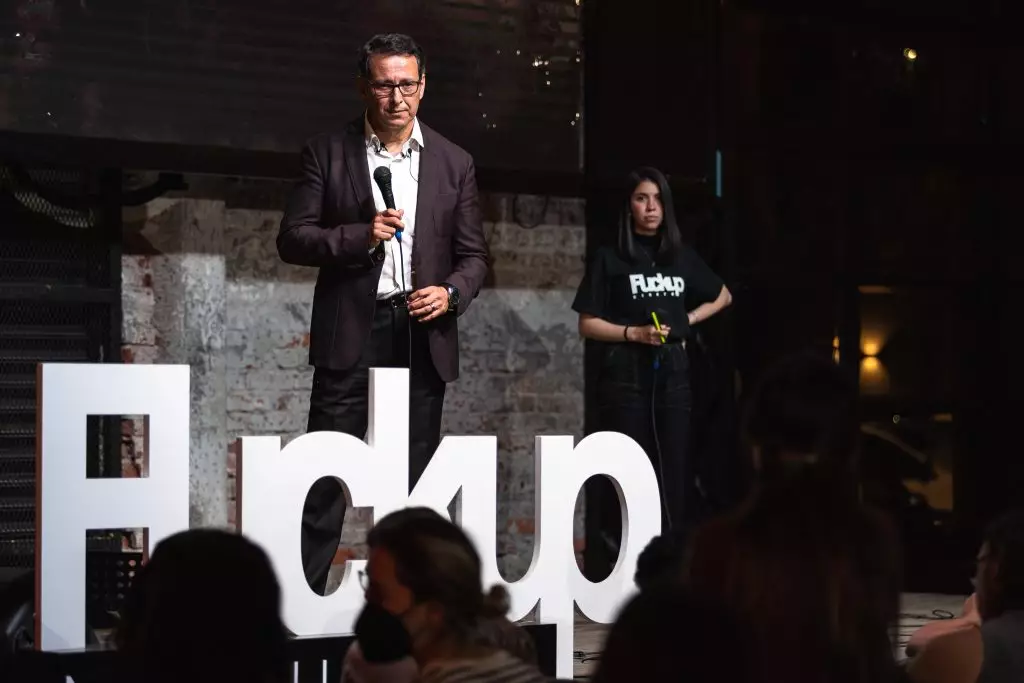
Ever since I’ve incorporated this sororo pillar into my life, I’ve been able to relate in a healthier way to the women I meet along the way, and I’ve stopped seeing them as competition—instead, we’ve joined forces and made space for one another in the places where we deserve to shine (fuck you, patriarchy—and not in the “ Fuckup Nights ” way).
If we work together, we all win.
Having allies is very important for living more openly, because it gives you safe and supportive spaces where you can be yourself. These are people who walk alongside you on your journey and allow you to express yourself authentically.
Sharing our experiences (and failures) matters, because it helps raise awareness in our communities and workplaces. What a difference it makes to live in places where your needs are taken into account! And yes, it is possible… If we organize, we all win.
The solutions to these problems are as simple and as complex (hey, little god… it’s me again) as learning to express our needs openly and honestly, taking others’ needs into account, setting healthy boundaries, and being our most authentic selves.
May resilience serve as the fuel that drives us to revolutionize ourselves, and may we come together in spaces that are safer, more vulnerable, and unfiltered for everyone!










.svg)

.webp)
.png)