Join our network to receive updates on local events and exclusive stories about failure and growth.
You're now part of our global community! You'll be the first to receive updates about upcoming events near you, delivered straight to your inbox. Plus, you'll get access to our special selection of the best failure stories of the month.
Oops! Something went wrong while submitting the form.
How did EO Ciudad de México turn a learning event into an evening of stories about failure and resilience?
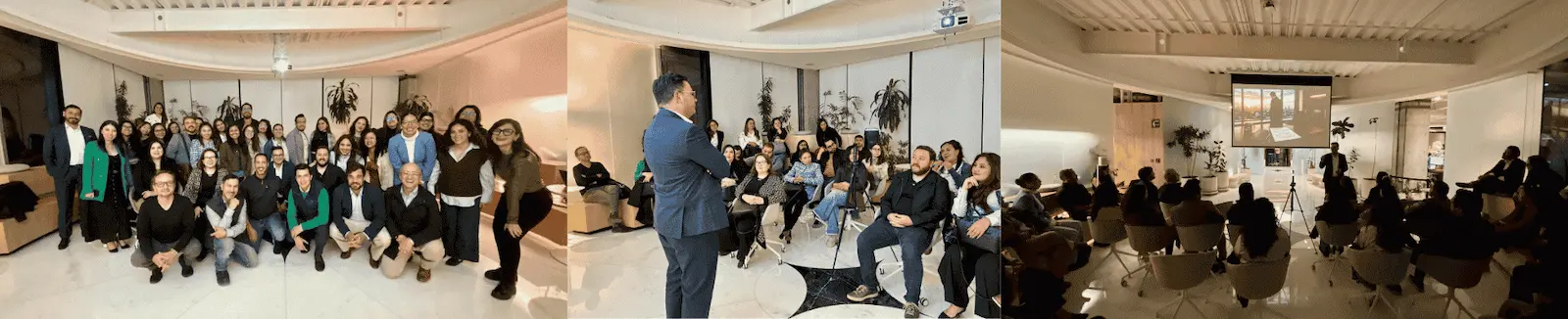
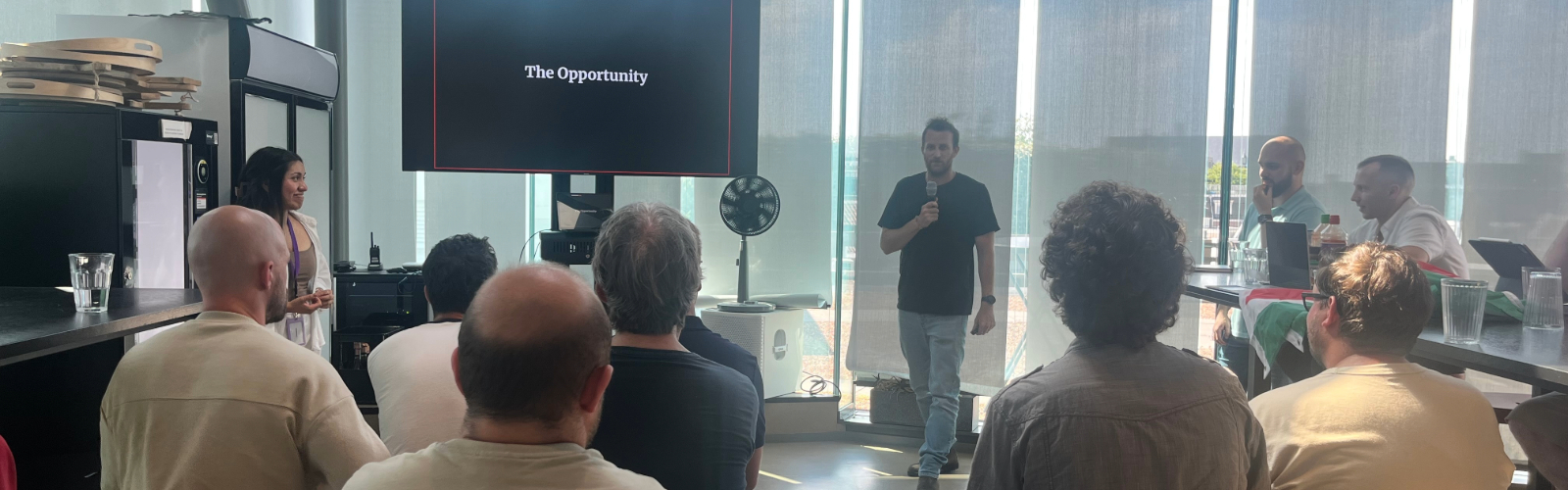
EO CDMX and Fuckup Nights brought together about 50 entrepreneurs at the Cantinflas Museum to hear three true stories of failure and resilience.
By:
Ricardo Guerrero
Here's how the second collaboration between the Entrepreneurs’ Organization and Fuckup Nights
A Learning event where a former chapter president, a lawyer from M&A, and a former consecrated member discussed what went wrong.
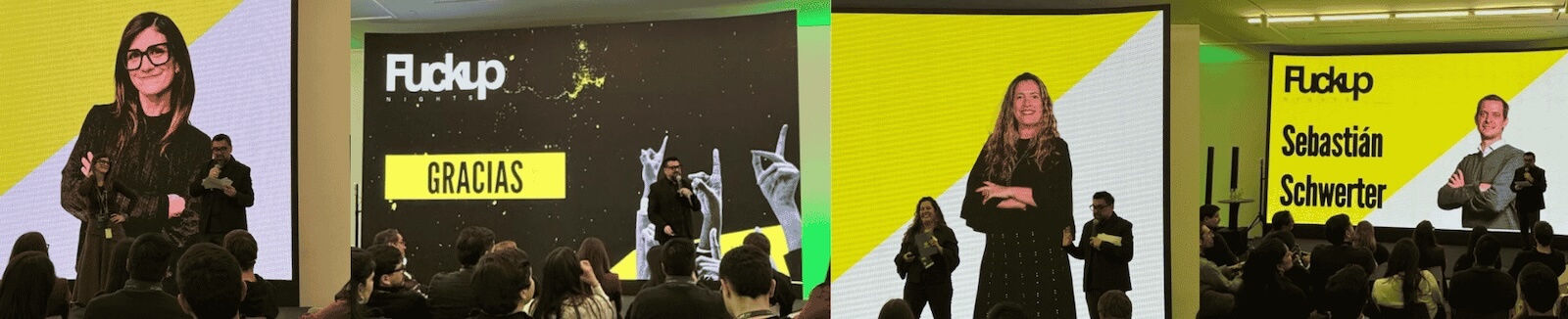
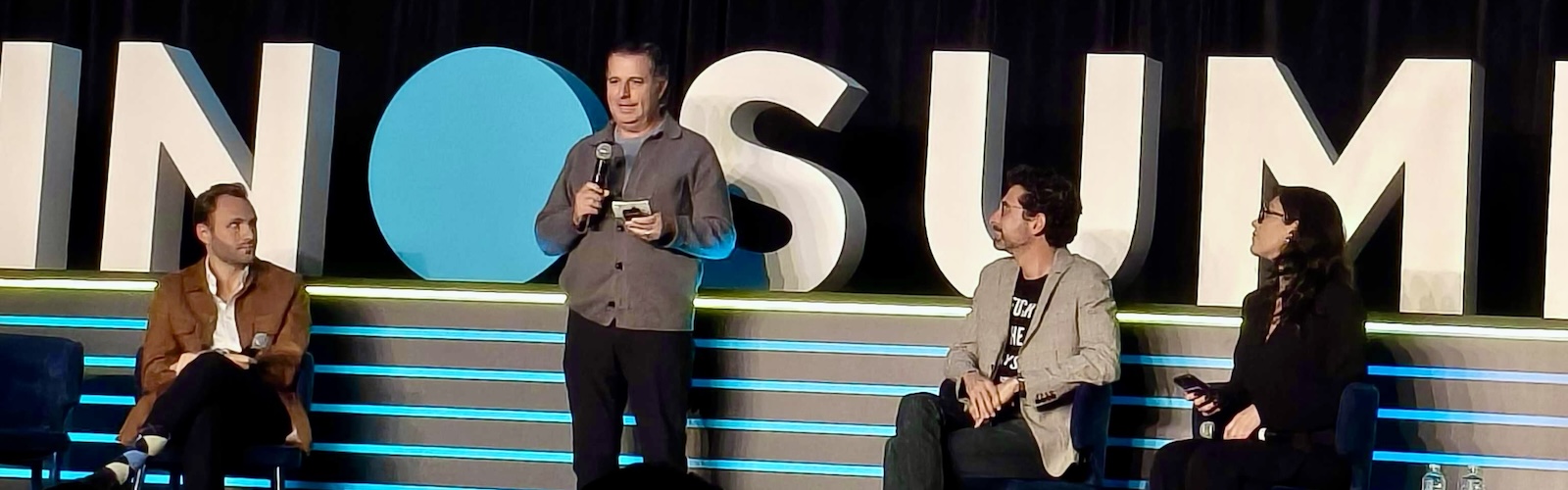
In 2026, we brought together nearly 50 entrepreneurs from EO Ciudad de México at the Cantinflas Museum. We sat down to hear three stories of failure and resilience at one of the chapter’s four most important Learning events of the year.
How can we build real trust when traditional formats no longer do so? We didn’t do it with yet another strategy presentation or yet another talk full of inspirational quotes. We created a space for the community itself to admit, out loud, what had cost them dearly.
Our second collaboration between EO and Fuckup Nights
EO CDMX brings together founders from the finance, retail, logistics, healthcare, education, and technology sectors. Its learning events aim to generate insights and drive action.
Prior to this event at CDMX, the EO USA chapter had held an online session with Fuckup Nights for 70 entrepreneurs. The event at CDMX was in-person, for its own community.
Once you're familiar with the room, the sense of vulnerability becomes more pronounced.
Gabo Echeverría: From Making $70 Million a Year to Laying Off 120 People
Gabriel Echeverría, “Gabo,” chaired the session. Today, he is an EO-certified Forum Trainer. He took the stage with a story he titled:
“The company went bankrupt. I didn’t.” — Gabriel Echeverría, former president of EO CDMX.
He started out selling his car every semester to pay for college. He founded XGR ( México), named after the initials of his first three children. The company grew to 120 employees and annual sales of $70 million, with nearly 80% of Cinemex’s theaters in its portfolio.
So he settled into a routine. Two major clients, ISO 9001 certification, payment terms of 90 or 180 days. The company stopped being proactive and became, in his words, a “order-taker.” Then the pandemic hit, the clients stopped paying, and he had to lay off his entire team while dealing with 90 suppliers.
When someone invited him to lunch with five other people and a promissory note on the table, he got up and left without signing it. He closed the company legally and didn't run away from any debts. Afterward, he started training for triathlons.
Allan Kaye: The Lawyer Who Said, “I’m Not Going to Keep Risking My Reputation”
Allan Kaye has spent more than 20 years handling M& M negotiations and shareholder disputes. He grew up with honesty as a core family value. Shortly after turning 19, he began working with his father, his role model, and discovered that his father was leading a double life.
He quit. At his next job, he saw the same patterns. At 25, he accepted a partnership that seemed like a dream come true—until the founding partner stole money from an important client.
“I’m not going to keep putting my reputation on the line.” — Allan Kaye, founding partner of Aziz & Kaye Business Law.
He accepted an interview at another firm “so as not to lose out on anything.” He joined as an associate—not a partner—at a modest firm. After three weeks, he wanted to quit. His boss wouldn’t let him. Today, he has been a partner there for more than 20 years.
Is everything okay with your team?
Br Fuckup Nights to Your Company
Corporate initiatives in psychological safety that leverage failure as a tool for cost reduction, productivity, employee satisfaction, and innovation.
Mariana Martínez: Four Years in a Convent and the Leap to Founding Creando Talento
Mariana Martínez was outgoing and loved to party—the last person you’d imagine in a convent. At age 18, she spent two years in Germany as a church volunteer and decided to take her vows. She lived for four years at Madrid with 60 other women, bound by vows of obedience, poverty, and chastity.
She fell in love with a seminarian who had also taken vows. She spent three months in discernment, without speaking to him. She decided to end the relationship for her sake, not his. She returned to México and, with her business partner, founded Creando Talento, which is now a consulting firm with 30 women who support small and medium-sized businesses in leadership and human potential.
“We can all change.” — Mariana Martínez, managing partner at Creando Talento.
Why does this matter for those who lead communities and teams?
If you’re involved in promoting culture, you already know that a motivational talk is forgotten within a week. That a strategic planning offsite produces a document and little else. That generic “ team -building” doesn’t change the way people talk to each other on a day-to-day basis.
What we saw at the Cantinflas Museum was something else entirely. A former chapter president sharing his story of bankruptcy shows that failure doesn’t exclude you from the community. That’s psychological safety in action: no one declares it—someone demonstrates it first.
When leaders talk about what went wrong, trust becomes more than just a value on the wall. And that trust is the foundation of employee retention, authentic leadership, and teams that report problems in a timely manner—not when it’s already too late.