Join our network to receive updates on local events and exclusive stories about failure and growth.
You're now part of our global community! You'll be the first to receive updates about upcoming events near you, delivered straight to your inbox. Plus, you'll get access to our special selection of the best failure stories of the month.
Oops! Something went wrong while submitting the form.
The workforce is looking for true moral leaders who are defined by their actions and consistency, not by their job titles.
In our opinion, leaders have two main characteristics: they truly listen, and they lead by example. A powerful starting point is for leaders to show the way, so that early adopters can help create critical mass for a community with new beliefs and habits.
Failure is, and always will be, unavoidable, universal, and unexpected. Leaders must know how to deal with it, and most importantly, how to encourage and inspire others despite it.
So, how should leaders use failure as a driving force?
Failure proves to be a powerful tool for fostering deeper connections and generating insights, because it challenges the paradigms of traditional hierarchy. Therefore, leaders should also view it as a great opportunityto move forward, teach valuable lessons, and spark insightful conversations among a team.
By facilitating sessions that are personal, fun, relaxed, and straightforward, we can create a special atmosphere that acknowledges and manages ego. This approach addresses the most pressing need of many companies: changing their cultures. You can’t change a culture by decree. Culture is the why, what, and how of how people do things on a day-to-day basis.
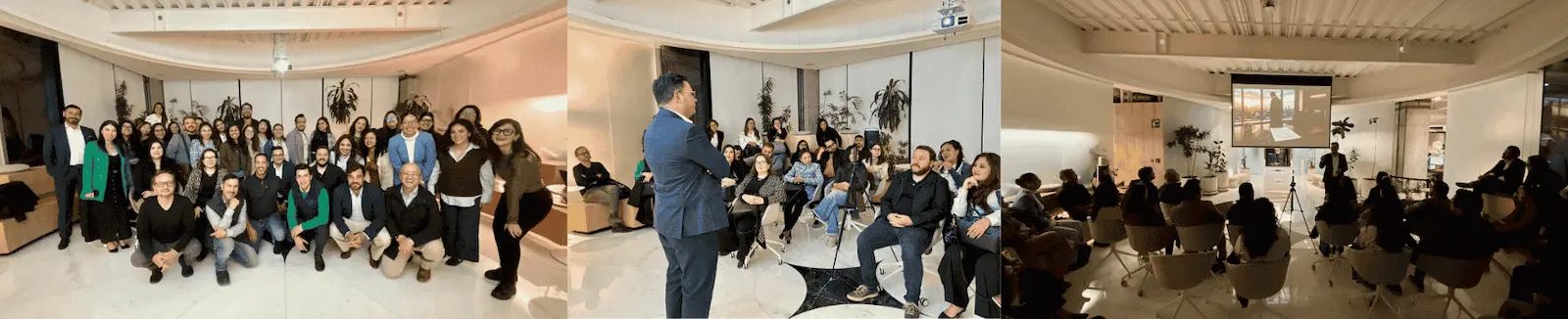
Based on those experiences and the insights we’ve gained from speakers at our private events, here’s some advice for leaders:
How can we foster a positive attitude toward failure?
Being a facilitator means shifting away from the old-school notion of an enlightened and invincible leader who always knows what to do, toward that of an inclusive leader who listens, truly empowers others, and fosters learning rather than assigning blame.
A leader's vulnerability makes everything from conversations to projects more transparent— fun , and innovative also helps a great deal.
How can we change our mindset toward failure?
We believe that cultural and behavioral changes must come both from the bottom up and through structural design—whether in a political institution, a company, or a social group.
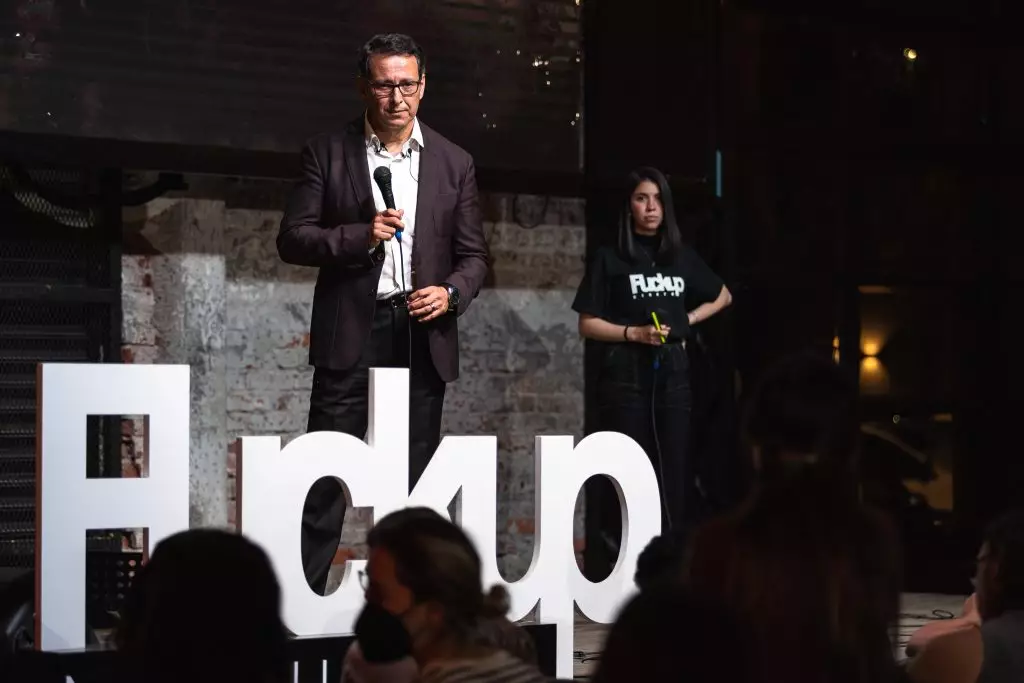
We created Fuckup Nights as an ongoing event series because we know that you don’t change your behavior by attending a single event or listening to a single talk—we need to turn those new actions into habits. We also decided not to focus on famous or “successful” speakers because we strive for inclusivity and community building.
Be vulnerable and let others be vulnerable as well.
Leaders and the pressure not to fail. Can we avoid failure?
If you have a negative outlook and find it hard to control how you react to challenges, you should try to avoid failure, as it will bring hardship and pain—but be mindful of the valuable lessons you’ll be missing out on!
Our approach at Fuckup Nights is to minimize social expectations and focus on how we react to difficult situations. It is this practice that ultimately builds resilience and brings us closer to happiness and freedom.
Long story short: A leader should set aside all preconceptions, always ask "why" behind the "why," and lead by example, striving to be a servant leader.








.svg)

.webp)

.png)
.png)
%20(1).png)
%20(1).png)
.png)
.png)


.avif)

.avif)
.avif)


.avif)


.avif)


.avif)


.avif)
.avif)


.avif)


.avif)


