Join our network to receive updates on local events and exclusive stories about failure and growth.
You're now part of our global community! You'll be the first to receive updates about upcoming events near you, delivered straight to your inbox. Plus, you'll get access to our special selection of the best failure stories of the month.
Oops! Something went wrong while submitting the form.
We like to infiltrate organizations like the UNDP at México to change perceptions of failure in the social sector
By:
Ricardo Castañeda
This year has been a whirlwind for Fuckup Nights. We’ve been able to serve as a Trojan horse and make an impact on countless organizations around the world. A key development this year was that we began, more and more, to address and listen to those failures in the social sphere.
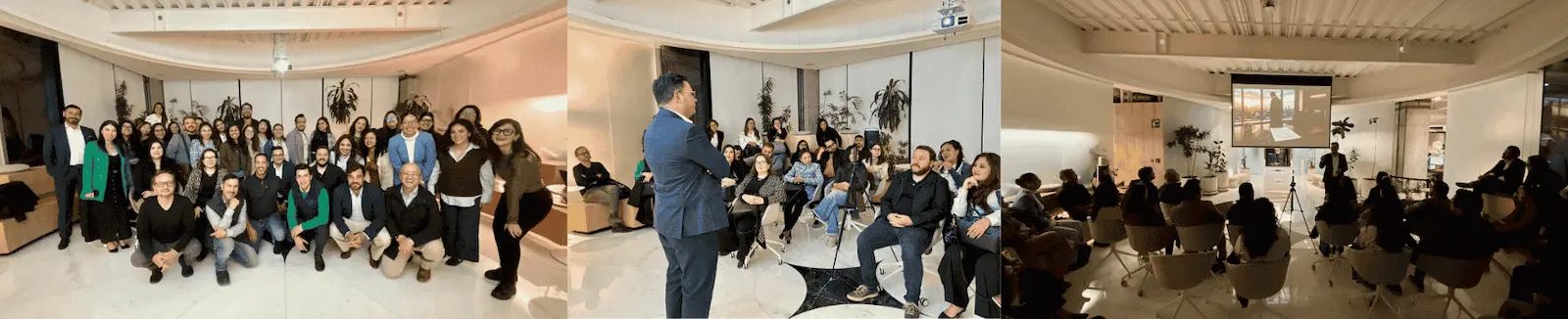
On December 13, we had the opportunity to organize, in collaboration with the United Nations Development Program (UNDP) Acceleration Lab at México, not only a Fuckup Night, but also a workshop where we explored in depth how failure goes beyond projects that don’t work and ideas that don’t take hold. Failure also affects our perception of reality, negatively impacts our self-confidence in achieving goals (impostor syndrome), and, quite specifically, does not help build spaces of psychological safety.
And that’s how we kicked off the day. Since it was 9 a.m., we had to swap the mezcal and beer for fruit, bread, and coffee. But that didn’t stop us from having deep, authentic, and vulnerable conversations.
Like any encounter with a person (or concept) you don’t know or aren’t familiar with, there was a bit of skepticism, a bit of fear, or perhaps even a bit of resistance. That’s normal, until you reach a point where the ice is broken, where people start to get involved, and where the real benefits of the exercise begin—namely, that openness to sharing their personal failures.
By being vulnerable with our coworkers and acknowledging—even if just for a moment—that the people we work with are still human beings, and that the only way we can achieve our goals as an organization is by connecting on a vulnerable level of support, encouragement, and acceptance—acknowledging that sometimes we screw up (something that’s completely natural for humans: making mistakes).
At the end of the workshop, we held a brief debriefing session where participants shared what they liked, what they didn’t like, and what they’d like to see happen next. Some admitted to experiencing imposter syndrome and said they hadn’t been aware of it.
Others acknowledged that more work is needed to create those spaces of psychological safety, while still others committed to improving the way they communicate with their own team. Just before we went to lunch, one woman asked the following question, with a tone of skepticism:
“Well… the workshop was great, and it’s amazing what we’re experiencing right now, but… how do we make sure this isn’t just a one-time thing and that it actually sticks around for the long term?”
To me, these are the questions that truly bring about change. It was obvious that there was a sense of disbelief.
The discussion that followed that question was very powerful, because it focused on specific actions we can start taking to bring about a cultural shift, recognizing that this event serves as a catalyst for conversation, but is not a magic wand capable of changing behaviors that have been normalized for much longer.
At that very moment, we saw what a psychologically safe space looks like: there was an openness to sharing ideas without fear of judgment, and the atmosphere was focused on finding solutions rather than criticizing or assigning blame.
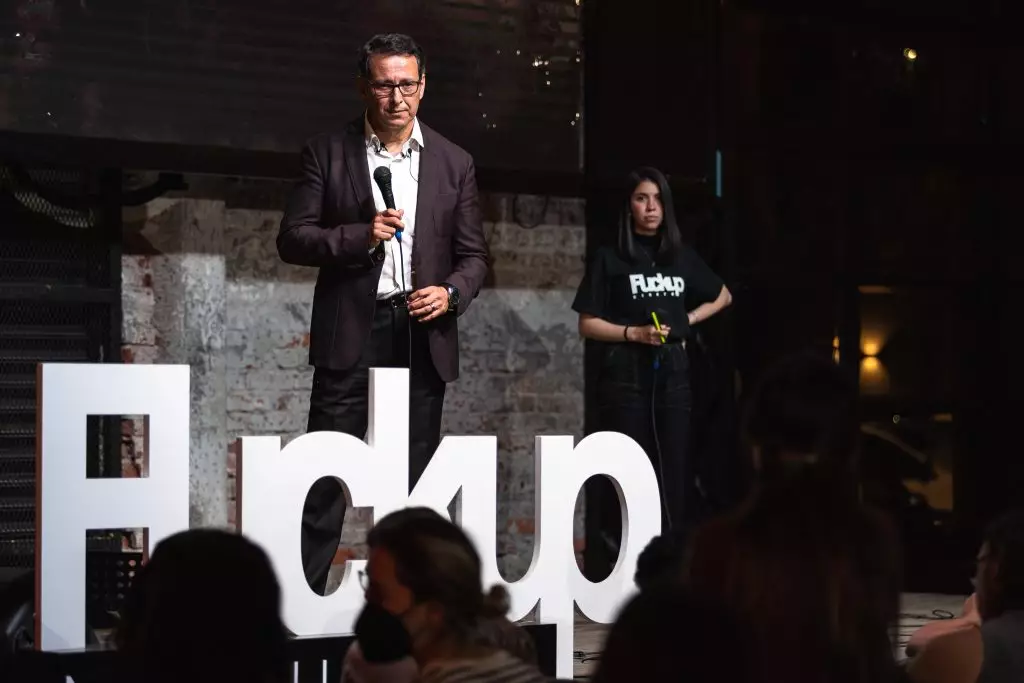
After a delicious meal, it was time to listen to stories of full-length failures and kick off the “ Fuckup Night.” For this event, some UNDP partners and collaborators were also invited to hear, live and in person, stories of both small and large failures.
One of the main fears people have about sharing their failures is what others might say or the potential rejection that might follow after making a mistake (and especially after sharing it in public). When the second speaker finished, I was deeply moved to hear one of the attendees comment during the Q&A session: “I already admired you before hearing this story, but now I admire you even more!” I don’t know if that was the reaction the speaker expected after sharing her story, but it definitely surprised her.
One thing I really like about * Fuckup Nights * is that it leaves many questions unanswered, and people leave with a look of both joy and confusion on their faces. Hiding our mistakes and refusing to show vulnerability to others is a paradigm that has been taking shape in our culture for a long time, and breaking it in this way obviously leads to many more doubts and reflections.
The main takeaway I have from this event is how important it is to change mindsets in organizations that have such a significant impact on humanity, such as the United Nations.
I got the sense that among the people who attended the workshop, there was a growing need and hope to work in an environment where they could be themselves, doing what they’re most passionate about, reaching their full potential , and discovering that vulnerability brings them closer together rather than driving them apart.
Want to bring the Culture of Failure to your company? The Failure Program helps you turn failure into an asset, boosting your team’s productivity and sparking innovation.
The Failure Program includes workshops, online courses, private Fuckup Nights , and a survey to assess how failure is handled in your organization. Read more here.








.svg)

.webp)

.png)
.png)
%20(1).png)
%20(1).png)
.png)
.png)


.avif)

.avif)
.avif)


.avif)


.avif)


.avif)


.avif)
.avif)


.avif)


.avif)


